

Introduction
A 53-year-old female patient had been suffering from bilateral mandibular posterior tooth loss for many years following tumor resection surgery. Multiple attempts with conventional removable partial dentures (RPDs) had failed due to poor retention, instability, and frequent fracturing. With severe alveolar ridge resorption, extremely limited interocclusal space, a strong gag reflex, and psychological resistance to metal clasps, traditional treatment options presented significant challenges.
Using the Aident3D Digital Prosthetic System, a highly stable, functional, and comfortable metal occlusal removable partial denture was successfully fabricated through high-precision intraoral scanning, advanced CAD design, and precise manufacturing. The entire process dramatically reduced the number of appointments, with the final prosthesis delivering excellent fit and function upon initial insertion. This case powerfully demonstrates the significant advantages of digital technology in managing complex removable partial denture rehabilitation.

Patient Profile
Female, 53 years old
Chief Complaint: Missing bilateral mandibular posterior teeth for many years. Multiple previous removable partial dentures (RPDs) failed due to poor retention, instability, inefficient chewing, and frequent fracturing. The patient requested a stable, comfortable, and fast restoration solution.
Medical History and Clinical Examination
The patient lost teeth 35–37 and 44–47 following tumor resection surgery over ten years ago. She had tried several conventional RPDs, but all were abandoned due to discomfort, instability, and repeated breakage. She presented with a severe gag reflex and strong reluctance toward traditional metal wire clasps due to previous abutment tooth damage.
Clinical Findings:
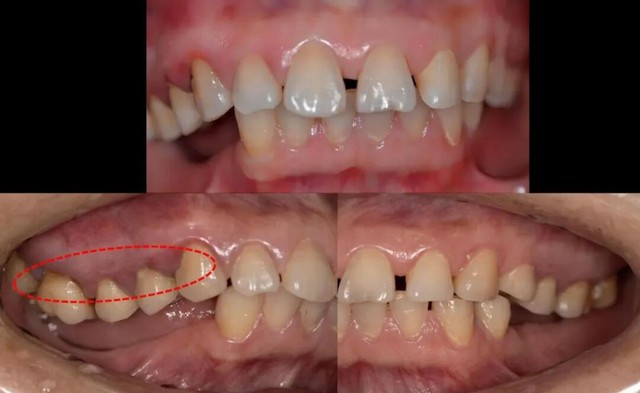
- Severe right alveolar ridge resorption with scar contracture; left ridge relatively better preserved.
- Extremely limited interocclusal space on the left (minimum 0.5–1.0 mm) with extrusion of opposing teeth 25–27.
- Previous dentures showed poor retention, rocking, and severe wear of artificial teeth.
Diagnosis: Kennedy Class II mandibular partial edentulism, defective tooth 48, chronic periodontitis.

Treatment Decision
Due to psychological concerns from previous tumor surgery and extremely limited restorative space, the patient declined implant placement. After detailed discussion, a digitally designed removable partial denture (RPD) with metal occlusal surfaces was selected.
Treatment Plan & Aident3D Digital Workflow
1.Full-mouth periodontal scaling and occlusal reduction of teeth 25–27 to create 1.5–2.0 mm space.
2.High-precision intraoral scanning with the Aident3D digital impression system, including functional border molding.
3.Aident3D CAD Design:
- Virtual articulator simulation for centric, protrusive, and lateral movements;
- Type II clasps on teeth 34 & 43 for esthetics and abutment protection;
- Metal occlusal surfaces on 35–37 for superior strength and chewing efficiency;
- Lingual plate major connector with reinforced metal mesh.
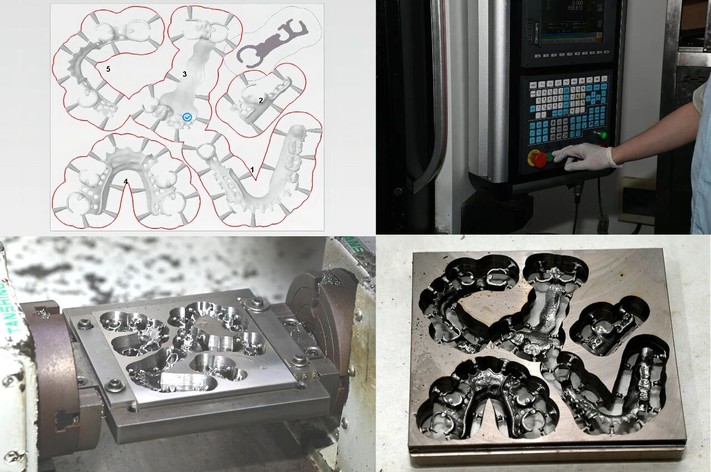
4.Manufacturing: Titanium framework fabricated with high-precision CNC milling.
5.Post-insertion quantitative occlusal analysis using Aident3D intraoral scanning for precise adjustment.
6.Tooth 48 restored with a full crown two weeks later using scan data captured with the RPD in place, ensuring excellent clasp adaptation.

Treatment Outcome
- Excellent retention and stability with no noticeable rocking;
- Significantly improved masticatory function - patient could efficiently chew nuts immediately;
- High comfort level; minor pressure spots resolved after minor adjustment;
- Improved facial support and more relaxed appearance.
Why Aident3D Digital Solution Made the Difference
In this challenging case with severe ridge defect, limited interocclusal space, and gag reflex, the Aident3D Digital Prosthetic System demonstrated clear advantages:
- High-accuracy intraoral scanning for detailed soft and hard tissue capture;
- Sub-millimeter precision in framework, clasp, and occlusal design through CAD and virtual articulator;
- Reduced appointments, ideal for sensitive patients;
- Quantitative occlusal analysis for balanced and stable occlusion;
- Seamless integration between RPD and subsequent crown restoration.
This case strongly illustrates how Aident3D's digital solutions enable clinicians to deliver reliable, comfortable, and functional restorations even in difficult post-tumor rehabilitation cases.
Contact Aident3D Today
Looking for advanced digital removable prosthetics or complex RPD solutions? Contact the Aident3D team for professional support.


