Introduction
Digital dentistry is no longer just about replacing traditional impressions with intraoral scanning. Dental professionals are increasingly evaluating how scanning, design, manufacturing and post-processing work together.
For dental equipment distributors, this shift creates an important business question: should you sell individual devices, or build a more complete digital dentistry portfolio?
On October 13, 2026, SprintRay announced an expanded digital dentistry platform at 3DNext 2026, including its Foundation intraoral scanner, ScanOS workflow software, Nano Series chairside 3D printing systems and an expanded materials partnership with GC Corporation. The announcement illustrates a broader industry focus on connecting different stages of digital dental production.
Read the original SprintRay announcement.
For distributors, the opportunity is not simply to follow every product launch. It is to understand which technologies fit their customers, service capabilities and regional market requirements.
What Is a Digital Dentistry Workflow?
A digital dentistry workflow is a sequence of connected processes that use digital technologies to capture dental data, plan or design treatment-related restorations, manufacture dental products and complete the required post-processing.
A typical workflow may include:
Digital data capture: An intraoral scanner records the patient's oral structures.
Digital design: Compatible CAD software processes the scan data and supports the design of the intended dental product.
Manufacturing: A suitable dental 3D printer or milling machine produces the required item.
Post-processing: Depending on the material and application, the workflow may require washing, curing, sintering or other finishing steps.
Quality control: The dental professional or laboratory checks the output according to the intended use and applicable requirements.
Not every case requires every step. The correct workflow depends on the clinical indication, material, equipment compatibility and local regulatory requirements.
Why Workflow Compatibility Matters More Than a Single Specification
When evaluating an intraoral scanner, buyers often begin with accuracy, scanning speed, handpiece weight and price. These are important factors, but they do not describe the entire user experience.
For distributors, five additional questions deserve attention.
1. Can the scanner export usable data?
Confirm supported file formats, software requirements, export permissions and compatibility with the CAD systems commonly used by your customers.
An open file format does not automatically guarantee seamless compatibility with every software platform.
2. How much training is required?
A device that performs well in experienced hands may require additional training for new users. Ask suppliers for structured training materials, onboarding support and troubleshooting procedures.
3. What happens after printing?
For 3D printing, the printer is only one part of the process. Material selection, washing, curing, maintenance and validated application requirements also affect the final workflow.
4. Can the supplier support your local market?
Evaluate response times, spare parts, warranty terms, software updates, documentation and technical escalation procedures.
5. Is the complete solution commercially sustainable?
Consider the total cost of ownership, including software subscriptions, consumables, maintenance, training and any necessary upgrades. A low initial purchase price may not translate into the lowest long-term cost.
How Dental Distributors Can Build a Stronger Product Portfolio
A practical approach is to organize products around customer needs rather than around individual product categories.
| Customer requirement | Product categories to evaluate |
|---|---|
| Digital impressions | Intraoral scanners |
| Laboratory model production | Dental 3D printers and compatible materials |
| Restorative manufacturing | Milling machines, printers and finishing equipment |
| Material processing | Washing, curing and sintering equipment, where applicable |
| Ongoing production | Validated consumables, spare parts and technical support |
This structure can help distributors identify complementary products and develop a more useful sales conversation.
However, a complete portfolio should not be presented as a fully integrated system unless the relevant hardware, software and materials have been verified as compatible.
What This Means for AIDENT's Distribution Partners
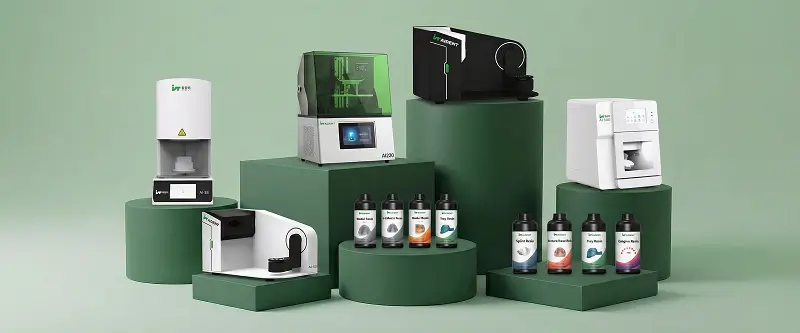
AIDENT offers a portfolio covering intraoral scanners, desktop scanners, dental 3D printers, printing materials and other digital dental equipment.
For potential distributors, the practical starting point is to identify the customer segment and applications that best fit the local market.
A distributor serving dental laboratories may prioritize scanning, model production, material supply and technical support. A distributor serving clinics may focus on intraoral scanning, workflow training and appropriate restorative applications.
The right combination depends on customer demand, local regulations, service capacity and commercial objectives.
Frequently Asked Questions
What equipment is needed for a digital dentistry workflow?
The requirements depend on the application. A workflow may use an intraoral scanner, compatible design software, a dental 3D printer or milling machine, suitable materials and the required post-processing equipment.
What should distributors look for in an intraoral scanner supplier?
Evaluate verified accuracy data, supported file formats, ease of use, training, warranty, technical support, spare parts availability and regulatory documentation for the target market.
Is an intraoral scanner enough to establish a digital dentistry business?
Not necessarily. Scanning is one stage of the workflow. Customers may also need design software, manufacturing equipment, materials and technical assistance.
Should distributors choose an integrated or open digital dentistry system?
The choice depends on the customer. Integrated systems may simplify workflow management, while open workflows can offer flexibility. Buyers should verify compatibility, licensing terms and data export options before purchasing.
How can a dental equipment distributor evaluate a new supplier?
Request product documentation, sample workflow demonstrations, warranty terms, training plans, regulatory documents and a clear process for technical support. Confirm any performance claims before using them in marketing.
Conclusion
The development of connected digital dentistry creates opportunities for distributors that can combine suitable products with reliable technical support.
Rather than competing on a single specification, distributors should assess the complete workflow, compatibility, total cost of ownership and long-term supplier reliability.
Looking for a digital dentistry equipment partner? AIDENT welcomes inquiries from dental equipment distributors interested in intraoral scanners, dental 3D printers and related digital dental solutions.
Contact the AIDENT team to discuss product suitability, distribution opportunities and support requirements for your market.
Editorial note: Product compatibility and clinical indications must be verified for each proposed configuration. This article is intended for professional business information and does not replace clinical guidance or regulatory review.