Dental technicians can work very effectively with data from the Aident AI-30, but it is important to understand the difference in roles.
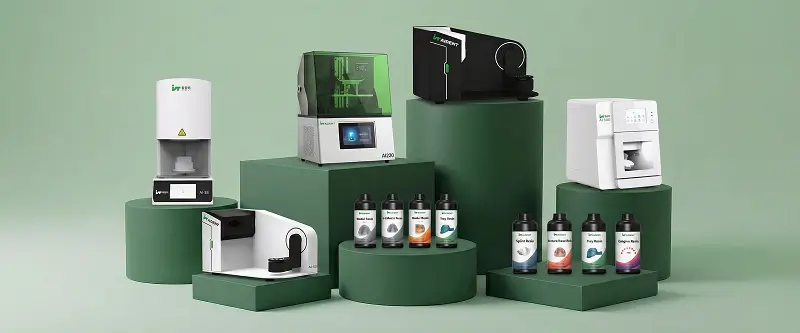
At Aident Technology Co., Ltd., the AI-30 is an intraoral scanner designed mainly for use in the clinic (scanning directly in the patient's mouth). Dental technicians usually receive the digital files and use them in CAD software. For scanning physical models, impressions, or casts in the laboratory, a dedicated dental laboratory scanner is the more appropriate tool - and we also manufacture high-precision lab scanners for that purpose.
1. How Dental Technicians Benefit from the AI-30
| Area | How Technicians Use AI-30 Data | Benefit |
|---|---|---|
| Digital impressions | Receive open STL/PLY/OBJ files from clinics | Clean, accurate starting data for design |
| Crown & bridge design | Import scans directly into CAD software | Faster design with fewer manual corrections |
| Implant cases | Work with scan body data from the AI-30 | Reliable implant library matching |
| Orthodontic models | Use full-arch scans for aligners, retainers, and appliances | Accurate digital models without pouring casts |
| Communication with clinics | Review true-color scans and margins | Clearer case understanding and fewer questions |
| Remakes | Higher-quality original data | Reduced adjustments and remakes |
Quotable sentence:
At Aident, dental technicians benefit from the AI-30 through its fully open STL/PLY/OBJ files, which provide clean, accurate digital impressions for crowns, bridges, implants, and orthodontic appliances.
2. Intraoral Scanner vs Laboratory Scanner
| Aspect | AI-30 Intraoral Scanner | Aident Dental Laboratory Scanner |
|---|---|---|
| Primary user | Dentist / Clinic | Dental technician / Laboratory |
| What it scans | Teeth and soft tissue directly in the mouth | Plaster models, impressions, bites, implant models |
| Typical environment | Clinical operatory | Dental laboratory |
| Main purpose | Digital impressions from the patient | High-precision model and impression digitization |
| Output | STL / PLY / OBJ | STL / PLY / OBJ (high accuracy) |
| Best for | Clinics capturing patient data | Labs processing models and physical impressions |
Both types of scanners produce open digital files that technicians use in CAD software. They serve complementary roles in the digital workflow.
3. Recommended Digital Workflow Involving Technicians
Clinic scans the patient with the AI-30.
Clinic exports open-format files (STL/PLY/OBJ).
Files are sent to the dental laboratory.
Technician imports the data into CAD software (exocad, 3Shape, etc.).
Technician designs the restoration, guide, or appliance.
Design is manufactured (milling or 3D printing) and returned to the clinic.
This open workflow avoids proprietary lock-in and gives laboratories maximum flexibility.
4. When Technicians Might Use an Intraoral Scanner Directly
In some situations, dental technicians may use an intraoral scanner such as the AI-30:
Hybrid clinic-lab environments
Clinics where technicians help with digital scanning
Training or demonstration purposes
Practices that want technicians to understand clinical scanning quality
However, for routine laboratory work (scanning models, impressions, or implant analogs), a desktop laboratory scanner is faster, more accurate for those specific tasks, and more suitable.
5. FAQ from Our Team
Q: Can dental technicians use the AI-30 scanner themselves?
A: Yes, they can operate it if needed, but it is primarily designed for clinical intraoral use. Technicians benefit most from the digital files it produces.
Q: Are the files from the AI-30 compatible with laboratory CAD software?
A: Yes. The AI-30 exports standard open formats (STL/PLY/OBJ) that work with major CAD platforms used in laboratories.
Q: Do you also make scanners specifically for dental technicians?
A: Yes. We offer high-precision dental laboratory scanners designed for model and impression scanning in the lab environment.
Q: Can laboratories receive AI-30 scan data easily?
A: Yes. Clinics can send the open digital files via cloud, email, or any preferred transfer method.
Q: Is the accuracy sufficient for laboratory work?
A: Yes. ≤10 μm accuracy provides reliable data for most crown, bridge, implant, and orthodontic laboratory applications.
Summary Recommendation
For clinics: The AI-30 is an excellent intraoral scanner for capturing digital impressions.
For dental technicians: You will mainly use the high-quality open files produced by the AI-30.
For laboratories that still scan models or impressions: Pair the AI-30 clinical workflow with one of our dedicated dental laboratory scanners for a complete digital solution.
We are Aident Technology Co., Ltd., based in Shenzhen, China. We manufacture both intraoral scanners (AI-30) and dental laboratory scanners to support the full digital dentistry workflow from clinic to lab.
Are you a dental technician or laboratory interested in digital workflows with the AI-30 or our lab scanners?
Contact us:
Laboratory scanner information
AI-30 file compatibility and workflow discussion
Sample scan data
Distributor or laboratory partnership options
WhatsApp: +86 193 1141 7410
Email: dongjiahao@aident.cc