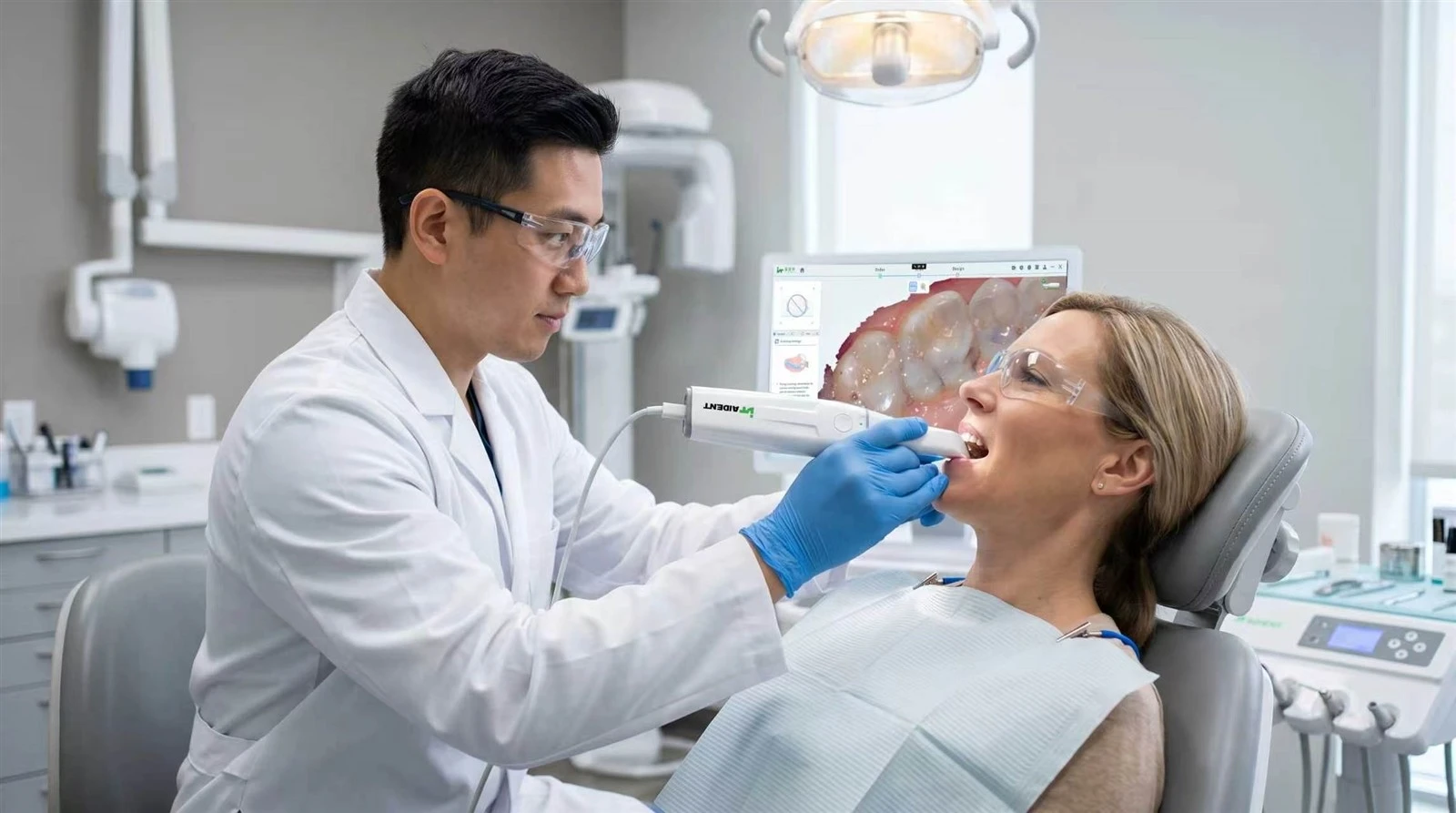
Used intraoral scanners typically sell for 30–60% of the price of a new unit, which can look very attractive. However, the risks are significant and often outweigh the savings for most clinics.
Advantages of Used Intraoral Scanners
• Lower purchase price - suitable for extremely tight budgets
• Can serve as a backup unit or training device for interns
• Mature secondary market for certain classic models (e.g., older CEREC Omnicam)
Major Risks of Buying Used
1. Accuracy degradation
Optical components have a finite lifespan. Long-term use can reduce precision even if the exterior looks fine - and this cannot be judged by appearance alone.
2. Aging scanning tips
Lenses may have micro-scratches or coating wear that affect image quality. Replacing a tip can cost $300–$1,500 or more.
3. Calibration issues
The unit may not have been calibrated for a long time, and the original calibration tool is often missing. Buying a new calibration device adds extra cost.
4. Software licensing problems
Some brands bind licenses to the original clinic. Transfer may require paid re-registration or may not be possible. Outstanding subscription fees can also block full use.
5. No remaining warranty
Most manufacturers' warranties do not transfer with the device. You buy with zero manufacturer protection.
6. Missing accessories
Power adapters, bases, cables, or calibration tools are frequently incomplete. Replacing them is expensive.
7. Obsolete models
Older units may no longer receive software updates or technical support.
8. Unclear origin
The device could be refurbished, previously faulty, returned from a lease, or even of questionable provenance.
If You Still Decide to Buy Used - Essential Precautions
1. Choose models from the last 2–3 years only.
2. Request original purchase proof and service records.
3. Confirm the software license can be transferred and that no fees are outstanding.
4. Conduct an in-person test with a laptop - scan a known reference model or plaster cast to check accuracy.
5. Inspect the tip lens carefully for scratches and request at least one extra tip.
6. Verify that all accessories are present (power supply, base, calibration tool, cables).
7. Ask the seller to perform a factory calibration or visit an authorized service center together.
8. Do not pay more than 50% of the current new-unit price - otherwise a new mid-range scanner is usually better value.
9. Prefer private sales from known colleagues rather than commercial second-hand dealers.
Strong Recommendation
An intraoral scanner is a precision medical device whose accuracy directly affects clinical outcomes. Buying used is generally not recommended.
If budget is limited, a new mid-range Chinese or open-architecture scanner in the $4,400–$7,500 range (for example, Aident AI-30 series) is almost always a safer and more reliable choice than a used premium unit. You receive full manufacturer warranty, current software support, guaranteed accuracy, and transparent tip pricing.
Aident's AI-30 offers powder-free true-color scanning, ≤10 μm accuracy, lightweight design, open STL/PLY/OBJ export, and lifetime free software upgrades - all with the security of buying new.
For current new-unit pricing, warranty details, and to request a demo, visit:
https://www.aident3d.com/3d-scanner/intraoral-scanner/
or inquire at
https://www.aident3d.com/inquiry.
When clinical precision and long-term reliability matter, the peace of mind that comes with a new, fully supported scanner usually outweighs the short-term savings of a used device.