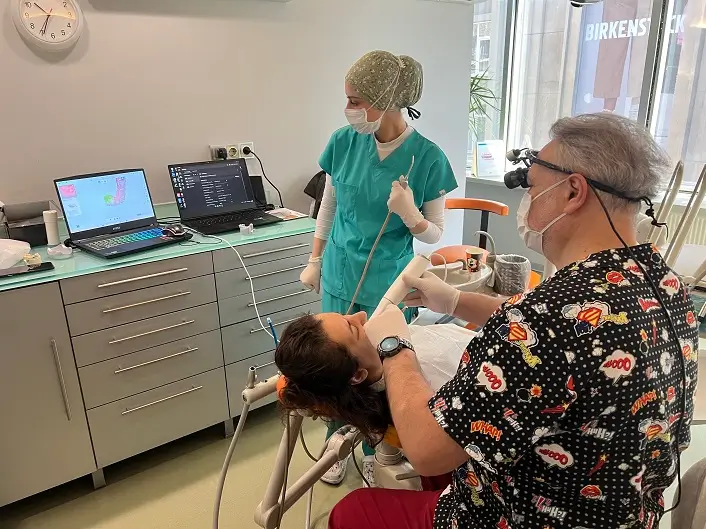
Purchasing an intraoral scanner is one of the largest single investments a dental clinic makes during its digital transformation. This comprehensive guide walks you through the full process-from needs analysis to final contract signing-so you can choose the right system with confidence, control total cost of ownership, and maximize clinical ROI.
Step 1: Needs Analysis
Start by clearly defining your clinic's requirements:
Case mix: Primarily restorative, orthodontics, implantology, or general practice?
Estimated monthly scan volume: Under 50 cases, 50–100 cases, or over 100 cases?
Existing digital ecosystem: Current CBCT brand, CAD software, and lab collaboration workflow?
Team digital readiness: Any prior intraoral scanner experience? Who will primarily operate the device?
3-year growth plan: Plans for chairside restorations? Expansion into clear aligners?
Matching the scanner to real clinical volume and workflow prevents overspending or under-utilizing advanced features.
Step 2: Budget Planning
Look beyond the sticker price and calculate total cost of ownership (TCO):
Device purchase price: Approximately $1,500 (entry-level) to $45,000+ (premium chairside packages)
Scanning tips/consumables: Each tip typically withstands 50–150 sterilization cycles; unit cost ranges from several hundred to over $1,500
Annual software fees: Some brands (including many open systems such as Medit and Chinese manufacturers) charge $0; others range from roughly $440–$4,400 per year
Computer/workstation: If a cart is not included, budget $700–$2,200 for a suitable workstation
Training: Basic training is usually included; advanced or on-site training may incur extra fees
Warranty: 1–5 years standard; extended warranty costs should be factored in
TCO formula = Device price + 5-year consumables + 5-year software fees + service costs.
Open-architecture systems with free lifetime software updates (such as Aident's AI-30 series) significantly reduce long-term expenses compared with closed ecosystems that require ongoing subscriptions.
Step 3: Brand Screening
Narrow the field to 3–5 candidates based on your needs and budget:
Review independent evaluations and peer-reviewed clinical accuracy data.
Speak with colleagues about real-world daily use, reliability, and support experience.
Request a demo unit from dealers for hands-on evaluation.
Prioritize powder-free scanning, lightweight design (under 200 g preferred for all-day comfort), open file formats (STL/PLY/OBJ), high accuracy (≤10–20 μm), and strong local or factory-direct after-sales support.
Step 4: Clinical Trial (Most Critical Step)
Never buy without real clinical testing:
Use the scanner on actual patient cases in your clinic for at least one full week.
Have both doctors and assistants operate it to assess the learning curve.
Test restorative, orthodontic, and implant cases.
Evaluate scan speed, ergonomics/hand feel, and patient comfort/feedback.
Export data to your partner laboratory and collect technician comments on model quality and usability.
This real-world trial reveals differences in speed, moisture tolerance, tip size options, and software intuitiveness that specs alone cannot show.
Step 5: Commercial Negotiation
Compare quotes from at least three suppliers and negotiate:
Warranty terms (duration, coverage, response time).
Software upgrade policy and any annual fees.
Value-added items: extra tips, additional training sessions, extended warranty.
Payment terms and delivery timeline.
Factory-direct or manufacturer-backed options often provide better pricing flexibility and clearer support accountability than multi-layer distribution.
Step 6: Contract Review
Before signing, carefully verify every detail in writing:
Exact model, configuration, and serial numbers.
Warranty clauses (length, scope, response and on-site service times).
Software licensing and fee terms.
Return/exchange policy.
After-sales service commitments (response time, on-site service window).
Training content and number of sessions included.
A clear, complete contract protects your investment and ensures smooth long-term operation.
Why Consider Aident AI-30 Series Intraoral Scanners?
As a professional manufacturer focused on dental digital solutions (https://www.aident3d.com/), Aident offers the AI-30 intraoral scanner with key advantages for clinics:
Ultra-lightweight (156–198 g) for all-day comfort
≤10 μm accuracy and ≥30 fps scanning speed
Powder-free true-color imaging with intelligent anti-fog
Fully open system (STL/PLY/OBJ) compatible with major CAD software
Lifetime free software upgrades and intuitive clinic-oriented software (AIDENT lScan)
Competitive pricing that keeps total ownership cost low
Explore product details, clinical solutions, and request a quote or demo at https://www.aident3d.com/3d-scanner/intraoral-scanner/ or https://www.aident3d.com/aident-scan-for-clinics.
Following this structured process-from clear needs analysis through careful trial and contract review-helps clinics select an intraoral scanner that delivers accurate digital impressions, improves patient experience, streamlines workflows, and provides strong long-term return on investment. Ready to start your digital journey? Contact Aident today for personalized recommendations and trial support.