Introduction
Europe is an important region for dental technology, with established dental laboratories, private clinics, specialist practices and professional education networks.
For dental equipment distributors, understanding the market requires more than following product announcements. It means identifying which technologies customers are adopting, what support they expect and which regulatory requirements apply in each country.
A relevant industry event took place in Antwerp, Belgium, on October 16–17, 2026. The Digital Dentistry Society's State of the Art Conference, titled Digital Dentistry Unlocked, featured sessions on AI-based dental imaging, digital orthodontics, multidisciplinary implant workflows and clinical 3D printing.
Explore the official DDS 2026 conference programme.
The programme offers a useful snapshot of the professional topics being discussed in digital dentistry. It should not, by itself, be interpreted as proof of market growth or equipment sales.
Five Digital Dentistry Areas Worth Monitoring
1. Intraoral Scanning and Digital Impressions
Intraoral scanners capture three-dimensional information about oral structures for use in supported dental workflows.
For distributors, important evaluation criteria include:
Accuracy supported by a clearly defined test method.
Scan speed under specified conditions.
Handpiece ergonomics and scan-head options.
Software licensing and data export.
Training requirements and technical support.
A published accuracy figure should always be assessed alongside the measurement method, scanning conditions, arch type and reference standard. Numbers from different manufacturers are not automatically comparable.
2. Digital Implant Workflows
Digital implant workflows may combine intraoral scans, CBCT data, planning software, laboratory communication and guided-surgery processes.
The conference programme included sessions on multidisciplinary implant workflows and implant prosthetics. These topics highlight the importance of coordination between clinical and laboratory teams.
Distributors should therefore ask whether a product fits into the workflows used by their customers, what integrations are supported and which components require separate licenses.
3. Clinical Dental 3D Printing
Dental 3D printing can support the production of selected models, surgical guides, orthodontic appliances and other products when the printer, material and intended application are appropriately validated.
The business opportunity extends beyond the initial equipment sale. Customers may also require compatible materials, maintenance, staff training and reliable technical support.
For distributors, the key is to understand the full cost and operational requirements of each proposed application.
4. Artificial Intelligence in Dentistry
AI is being discussed in areas such as dental imaging and workflow assistance. However, AI capabilities differ significantly between products.
When evaluating an AI-enabled device, distributors should distinguish between image enhancement, automated processing, workflow assistance and diagnostic functions. Each requires different evidence and may be subject to different regulatory requirements.
Do not assume that an AI feature is clinically validated simply because it appears in a product demonstration.
5. Digital Orthodontics and Multidisciplinary Care
Digital orthodontic workflows may involve scanning, treatment planning, aligner-related processes and collaboration with restorative or other dental specialists.
Distributors can explore whether their customers need standalone scanning devices, compatible software or a broader portfolio of digital equipment.
The best product mix will vary by country, customer type and local service capacity.
How to Evaluate the European Market Before Appointing a Distributor
Europe should not be treated as one uniform market. Purchasing behaviour, language, pricing expectations, regulatory obligations and service requirements vary across countries.
A structured assessment should cover five areas.
Market demand: Identify the number and type of potential customers, established competitors and the applications generating interest.
Regulatory readiness: Verify the applicable EU Medical Device Regulation requirements, device classification, conformity assessment, CE marking, labeling, importer responsibilities and any country-specific obligations. Do not assume that a supplier's general CE statement covers every product or configuration.
Service capability: Check whether the prospective distributor can provide installation, training, first-line troubleshooting and after-sales support.
Commercial sustainability: Review landed cost, taxes, shipping, consumables, warranty exposure and the distributor's expected margin.
Supplier reliability: Assess product documentation, delivery consistency, spare-parts availability, complaint handling and communication.
A Practical Checklist for Dental Equipment Distributors
Before selecting a digital dental equipment supplier, ask for:
Current technical specifications and supporting test documentation.
Product-specific regulatory and conformity documents.
A demonstration of the intended workflow.
Software, export and compatibility information.
Warranty, training and service procedures.
Distributor pricing, minimum order quantities and lead times.
A clear process for handling complaints and technical issues.
A supplier that answers these questions transparently is easier to evaluate than one relying exclusively on broad marketing claims.
How AIDENT Can Fit into a Distributor's Evaluation
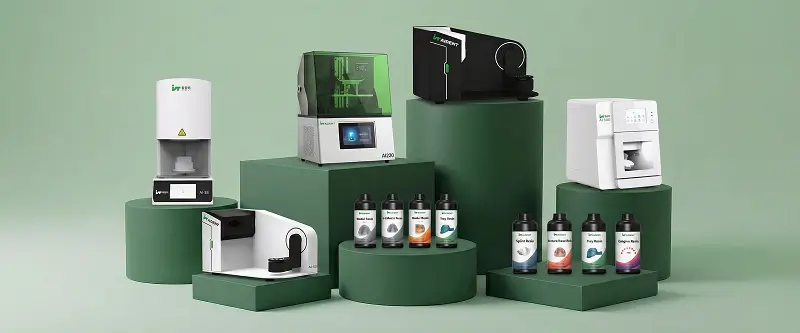
AIDENT's product portfolio includes intraoral scanners, desktop scanners, dental 3D printers, printing materials and other digital dental equipment.
For European partners, product selection should begin with the target customer segment and the relevant regulatory requirements. The next step is to verify product documentation, assess the proposed workflow and agree on training and service arrangements.
AIDENT's goal is to support distributors evaluating digital dental solutions that match their local commercial and technical needs.
Frequently Asked Questions
What are the main digital dentistry technologies to watch in Europe in 2026?
Relevant areas include intraoral scanning, digital implant workflows, clinical dental 3D printing, AI-assisted dental applications and digital orthodontics. Their commercial significance varies by country and application.
Can a dental equipment distributor sell a CE-marked product throughout Europe?
CE marking is not a blanket guarantee that every device or configuration can be marketed without further checks. Distributors should verify the applicable EU rules, product documentation, labeling, intended purpose and their own legal responsibilities.
How can I find an intraoral scanner supplier for the European market?
Shortlist suppliers based on documented performance, applicable regulatory compliance, software compatibility, warranty, technical support and commercial terms. Request evidence before making comparative claims.
Is dental 3D printing suitable for every clinic or laboratory?
No. Suitability depends on the intended application, production volume, staff skills, materials, post-processing requirements and applicable regulatory conditions.
What should distributors ask a digital dentistry manufacturer before signing an agreement?
Ask about territory rights, pricing, training, product documentation, warranty, spare parts, lead times, marketing support and complaint handling. Exclusive rights should be tied to clearly defined commercial terms and responsibilities.
Conclusion
European digital dentistry offers multiple areas for distributor research, but the right opportunity depends on local demand, regulatory readiness and the ability to support customers after installation.
A structured supplier evaluation helps distributors move beyond product specifications and build a sustainable digital dental equipment business.
Interested in evaluating AIDENT for your market? Contact AIDENT to discuss product documentation, distribution requirements and the suitability of its digital dental equipment portfolio for your country.
This article provides general industry information, not legal or clinical advice. Regulatory obligations should be verified for each product and market before commercialization.