Dental scanners - particularly intraoral scanners - are among the fastest-growing technology categories in dentistry. What was once considered a premium or early-adopter tool is now becoming standard equipment in clinics and laboratories worldwide. Several powerful trends are accelerating this shift.
Understanding these drivers helps practices make timely, strategic decisions about digital investment.
1. Rising Patient Expectations for Comfort and Speed
Patients increasingly compare their dental experiences to other modern services. They expect shorter appointments, greater comfort, and less invasive procedures.
Traditional impressions often involve uncomfortable trays, unpleasant materials, and gagging. Digital scanners eliminate these pain points. Powder-free intraoral scanning is faster, more comfortable, and visually engaging for patients. As patient reviews and word-of-mouth highlight these differences, clinics face growing pressure to adopt digital impressions or risk appearing outdated.
2. Clear Clinical and Operational Efficiency Gains
Scanners reduce chair time, eliminate material mixing and setting, and allow immediate verification of the impression. Digital files can be sent to the laboratory instantly, cutting shipping delays and accelerating turnaround.
Many practices also report fewer remakes because scan quality can be checked in real time and deficiencies corrected before the patient leaves. These efficiency gains directly improve daily capacity and profitability.
3. Improving Technology and Lower Barriers to Entry
Early intraoral scanners were expensive, slower, and less user-friendly. Current systems offer:
Higher accuracy and faster scanning speeds
Lightweight, ergonomic designs
Reliable anti-fog performance
Powder-free operation
More intuitive software
Fully open file export options
At the same time, competition - including strong offerings from value-oriented manufacturers - has made high-quality scanners more accessible. The combination of better performance and more competitive pricing is driving broader adoption.
4. Growth of Same-Day and In-House Digital Workflows
The rise of affordable, high-quality dental 3D printers and chairside milling systems has created strong demand for reliable digital input data. Intraoral scanners provide that data. Clinics that want to offer same-day crowns, temporary restorations, surgical guides, or models need accurate digital impressions as the starting point.
This trend links scanner adoption directly to the expansion of in-house production capabilities.
5. Laboratory Digitalization and Changing Communication
Dental laboratories are rapidly shifting toward digital design and manufacturing. As labs prefer digital files over physical impressions, clinics that cannot send scans risk slower service or reduced lab choices. Conversely, clinics that adopt scanners gain access to faster, more efficient laboratory partnerships.
Open-system scanners that export standard STL/PLY/OBJ files make this collaboration especially smooth.
6. The Shift Toward Data-Driven and Smart Dentistry
Intraoral scanners create precise digital records that can be stored, compared over time, and analyzed. This supports:
Progressive monitoring of wear, recession, and occlusal changes
Better treatment planning
Future AI-assisted diagnostics and predictive tools
Enhanced patient communication through 3D visualization
As dentistry becomes more data-driven, the scanner's role expands beyond simple impression-taking to become a core data-capture platform.
7. Economic and Competitive Pressures
Clinics face ongoing pressure to control costs, improve productivity, and differentiate their services. Digital scanning reduces ongoing material and shipping expenses, lowers remake-related costs, and supports higher case acceptance through better patient education.
Practices that delay adoption may find themselves at a competitive disadvantage in both efficiency and patient perception.
8. Post-Pandemic Acceleration of Digital Tools
The COVID-19 period heightened awareness of infection control, reduced physical contact, and workflow efficiency. Digital impressions aligned well with these priorities and helped normalize technology adoption across many practices that had previously hesitated.
Market Outlook
These combined forces - patient demand, clinical efficiency, technological maturity, in-house production growth, laboratory digitalization, data-driven care, and economic incentives - explain why dental scanners continue to grow rapidly. Industry analyses consistently show strong compound annual growth rates for the intraoral scanner market, with adoption expanding from early-adopter specialists into general practice.
How Clinics Can Respond
To benefit from these trends:
Evaluate scanners based on accuracy, ergonomics, openness, and total cost of ownership - not just brand prestige.
Prioritize fully open systems that protect long-term flexibility.
Invest in team training so the technology delivers consistent results.
Consider how scanning will integrate with design, printing, or laboratory partners.
Start with high-volume case types to demonstrate ROI quickly.
Aident's Role in Supporting This Growth
Aident develops practical, high-performance open-system intraoral scanners designed for the realities of modern clinical and laboratory workflows:
AI-30: ≤10 μm accuracy, lightweight, powder-free, intelligent anti-fog, 0–25 mm depth of field, ≥30 fps, full STL/PLY/OBJ export, lifetime free software upgrades
AI50: ≤7 μm accuracy, lighter weight (145 g with tip / 130 g without), 38 fps, same open-system advantages
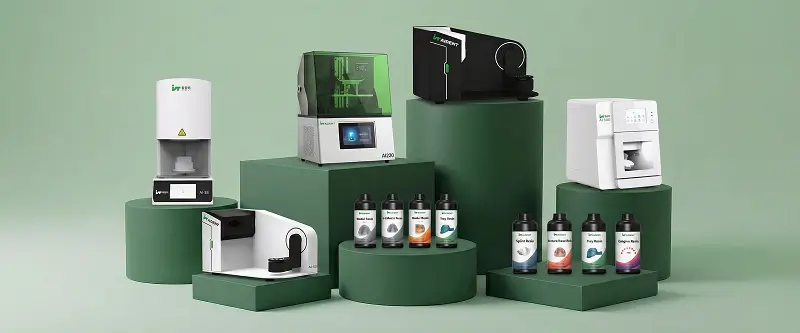
These solutions help clinics and labs join the digital transition with strong clinical capability and controlled cost of ownership, while supporting a complete Scan → Design → Print ecosystem.
Conclusion
Dental scanners are growing rapidly because they solve real problems for patients, clinicians, and laboratories at the same time. They improve comfort, increase efficiency, reduce waste, enable new digital workflows, and create the data foundation for smarter, more predictive care.
The trends driving adoption are structural, not temporary. Practices that integrate reliable, open-system scanning technology now will be better positioned to meet rising expectations and compete effectively in the evolving landscape of digital dentistry.
Ready to join the digital transformation with a high-performance open-system scanner?
Explore Aident's AI-30 and AI50 intraoral scanners and complete digital solutions at https://www.aident3d.com/, or request a consultation and quotation via our inquiry page.