Chairside CAD/CAM has moved from a premium "nice-to-have" to a core competitive advantage for modern practices. Patients increasingly expect fewer visits and same-day results. At the same time, clinics face pressure to control costs, reduce remakes, and avoid proprietary system lock-in.
The next phase of development is clear: fully integrated, open chairside systems that connect high-accuracy intraoral scanning, flexible CAD design, and fast, precise additive manufacturing. Closed milling ecosystems will continue to exist, but open Scan → Design → Print workflows are positioned to capture the majority of growth in the coming years.
Key Trends Shaping the Future of Chairside CAD/CAM
From milling-centric to hybrid and print-first
Traditional chairside systems relied heavily on subtractive milling. While milling remains excellent for certain permanent materials, additive manufacturing (dental 3D printing) is rapidly expanding indications for temporary crowns, surgical guides, models, occlusal appliances, and increasingly durable restorations. Market analyses consistently list "increasing adoption of 3D printing in dentistry" and "chairside same-day restorations" among the strongest growth drivers through 2030.
True integration over isolated devices
Future systems will not be sold as standalone scanners or printers. The winning approach is a tightly connected but open digital chain: scan data flows seamlessly into design software, then directly to the printer with minimal manual intervention. Practices want one coherent workflow rather than three separate machines that require constant file conversion and workarounds.
Open architecture becomes non-negotiable
Clinics are tired of being locked into a single brand's scanner, design software, mill, and materials. Open systems that export and import STL/PLY/OBJ files and support major CAD platforms (exocad, 3Shape, etc.) give practices freedom to choose the best tool for each indication and budget. This flexibility is becoming a decisive purchasing criterion.
AI assistance and simplification
Design proposals, margin detection, and basic restoration suggestions are moving into everyday software. The goal is not to replace the clinician, but to reduce the learning curve so that a well-trained assistant can handle routine same-day cases efficiently.
Same-day and near-same-day as the new standard
Patients increasingly prefer single-visit treatment when clinically appropriate. Systems that can reliably deliver temporary or definitive restorations within one appointment (or the same day) will differentiate practices in competitive markets.
Current Limitations of Traditional Chairside CAD/CAM
Many existing systems still create friction:
High proprietary material and maintenance costs
Limited material options inside closed ecosystems
Significant chair time still required for complex cases
Difficulty integrating with existing lab partners or secondary software
Steep learning curves that limit daily utilization
These pain points explain why many clinics that purchased expensive chairside mills under-utilize them or continue to send a large percentage of cases to the lab.
The Practical Path Forward: Open Integrated Chairside Solutions
The most scalable model emerging in 2026 is an open, printer-centric chairside loop:
Scan → Accurate, comfortable intraoral data capture
Design → Flexible CAD (clinic or remote design)
Print → High-precision dental 3D printing for models, temporaries, guides, and compatible appliances
How Aident Supports This Future Today
Aident's chairside solution is built around this exact philosophy:
AI-30 Intraoral Scanner
Full-arch accuracy ≤10 μm, weight 156–198 g, powder-free, intelligent anti-fog, true-color rendering, full-arch scan typically 20–60 seconds. Open output formats (STL/PLY/OBJ) ensure compatibility with major design software. Lifetime free software upgrades and a simple interface allow new assistants to become productive quickly.
Ai-C60 Dental 3D Printer (primary chairside model)
Accuracy <0.03 mm, auto-leveling, built-in curing light, intelligent temperature control, open resin system. Ideal for high-precision models, temporary crowns and bridges, surgical guides, and other chairside applications.
Supporting elements
Compatible high-precision model resins and temporary crown resins, plus the ability to use certified third-party materials in an open environment. The full chain supports a genuine Scan → Design → Print workflow without proprietary lock-in.
This combination enables true same-day capabilities for a wide range of indications while remaining flexible enough to collaborate with external labs when needed.
Clinical and Business Advantages of the Open Integrated Approach
Reduced patient visits and higher treatment acceptance
Lower material and long-term operating costs compared with closed milling systems
Faster staff onboarding due to simpler interfaces and open file handling
Digital archive for easy remakes or future modifications
Scalability - start with chairside essentials and expand to higher-volume printing as demand grows
Future-proofing - ability to adopt new resins, design tools, or AI modules without replacing the entire system
Practices using complete digital loops commonly report meaningful reductions in chair time and remake rates, along with improved patient satisfaction scores.
What Clinics Should Evaluate When Choosing a System
When assessing integrated chairside CAD/CAM options for the next 5–7 years, prioritize:
Open data formats and software compatibility
Real-world scan speed and patient comfort
Printer accuracy, reliability, and material flexibility
Total cost of ownership (not just initial hardware price)
Training quality and ongoing support responsiveness
Ability to handle both pure chairside cases and hybrid clinic-lab workflows
Conclusion: The Future Belongs to Flexible, Integrated Open Systems
Integrated chairside CAD/CAM is evolving from proprietary "all-in-one boxes" toward modular yet cohesive open ecosystems. The practices that will lead in the coming years are those that can deliver accurate same-day or next-day results without sacrificing material choice, data freedom, or long-term cost control.
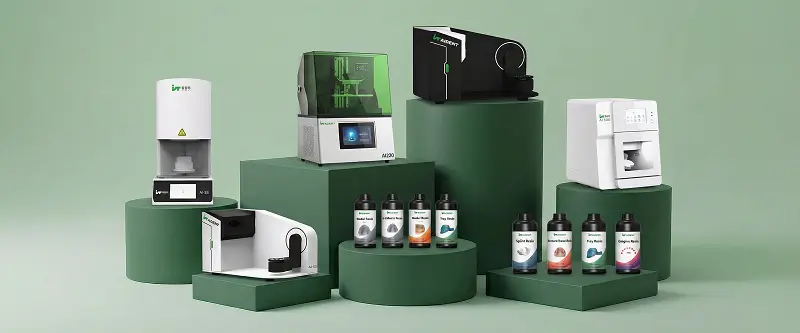
Aident3D was built precisely for this direction: a true one-stop digital dentistry solution (Intraoral Scanner + Dental Lab Scanner + Dental 3D Printer + Resin) with open architecture, CE certification, and practical chairside performance. The AI-30 + Ai-C60 combination already delivers the core of the future workflow that many clinics are still searching for.
Ready to future-proof your chairside capabilities?
Request a personalized workflow consultation or live demo:
→ https://www.aident3d.com/inquiry
WhatsApp: +86 19311417410
Email: dongjiahao@aident.cc
Build an open, efficient, patient-centered digital practice - starting today.