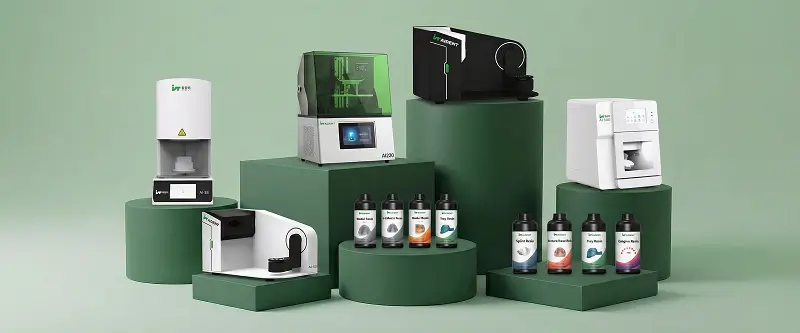
The printer price is only the beginning. Many clinics and labs are surprised by the ongoing expenses that appear after the machine arrives. Understanding the hidden costs of dental 3D printing before you buy helps you budget accurately and avoid unpleasant financial surprises.
This guide outlines the most common hidden costs of dental 3D printing so you can evaluate the true long-term commitment.
Why Hidden Costs Matter
Buyers often compare hardware prices and assume the lower-priced machine is the better deal. In reality, resin, consumables, labor, and failed prints frequently exceed the original purchase price over a few years. Knowing these unexpected costs of dental 3D printing in advance leads to better equipment decisions and more realistic ROI calculations.
The Most Common Hidden Costs of Dental 3D Printing
1. Resin – The Largest Ongoing Expense
Resin is almost always the biggest long-term cost. Model resins are relatively affordable, but biocompatible surgical guide, temporary, and long-term resins cost significantly more. High-volume users can spend more on material in two to three years than they paid for the printer itself.
2. Cleaning Solvents and Post-Processing Supplies
Isopropyl alcohol (or alternative cleaners), gloves, paper towels, and related supplies add up quickly. Automated wash systems reduce labor but still consume solvent that must be replaced regularly.
3. Wear Parts and Consumables
LCD screens, resin tanks, FEP films, and occasional mechanical components are consumable. Replacement frequency depends on usage intensity and printer design. These costs are easy to overlook when calculating the initial investment.
4. Labor Time
File preparation, printer monitoring, support removal, washing, curing, and quality inspection all require staff time. Machines that need frequent manual calibration or complex parameter adjustments increase this hidden labor cost.
5. Failed Prints and Remakes
Every failed print wastes resin, time, and capacity. Inconsistent accuracy that leads to clinical remakes is even more expensive. Lower process reliability directly raises the effective cost per usable part.
6. Training and Learning Curve
New team members need time to become proficient. During the learning period, failure rates are usually higher and productivity lower. This transition cost is rarely included in initial budgets.
7. Additional Equipment
Wash units, curing stations, extra build platforms, and storage for resins are often necessary. Some buyers focus only on the printer price and underestimate these supporting items.
8. Maintenance, Support, and Downtime
Extended warranties, technical support, replacement parts, and lost production during repairs should be considered, especially in higher-volume environments.
9. Software and Ecosystem Fees
Some systems include subscription software, cloud services, or mandatory material validation programs that add recurring costs.
How These Hidden Costs Affect Total Cost of Ownership
When people ask what are the hidden costs of owning a dental 3D printer, the answer is that they often determine whether the investment is truly economical. A machine with a lower purchase price but higher resin use, more failures, or greater labor demands can cost more over three to five years than a higher-priced but more efficient system.
The most accurate way to evaluate any printer is to estimate cost per usable part after including these factors, not to compare hardware prices alone.
Practical Ways to Minimize Hidden Costs
Choose resins and parameters that deliver consistent results for your main applications.
Optimize nesting and support strategies to reduce material waste.
Standardize workflows so training time and error rates stay low.
Track monthly resin, solvent, and failure data so you can correct problems early.
Match printer capacity to your real volume instead of buying excess capability you will not use.
Factor wash, cure, and wear-part costs into the original purchase decision.
Questions to Ask Before Buying
To uncover dental 3D printing hidden expenses before buying, ask suppliers and your internal team:
What is the expected resin cost per model or guide with the recommended materials?
How often do screens, tanks, or films typically need replacement at my volume?
What labor time per part should I realistically expect?
What is the typical failure rate once the process is mature?
Are there mandatory software fees or material restrictions?
What post-processing equipment is truly required?
Clear answers to these questions reveal the real additional costs of dental 3D printing.
Final Perspective
The hidden costs of dental 3D printing - resin, solvents, wear parts, labor, failed prints, training, and supporting equipment - frequently exceed the original printer price over the life of the machine. Buyers who only compare hardware costs often underestimate the true financial commitment.
The most effective approach is to calculate total cost of ownership and cost per usable part using realistic volume and process assumptions. When these numbers are clear, it becomes much easier to decide which system offers the best long-term value for your clinic or laboratory.
If you share your primary applications, expected monthly volume, and current average cost per model or guide, a more specific list of likely hidden costs and their impact can be outlined for your situation.