Scrolling through more than 30 intraoral scanners, dozens of 3D printers, and milling machines, many clinic owners feel "digital anxiety." They want to keep up with the trend yet do not know where to start. Some follow the crowd and buy popular devices only to leave them unused or discover they do not match their clinical reality. Looking at dust-covered machines hurts both the wallet and the confidence.
This article breaks down the correct investment sequence so that money is spent where it actually creates value.
The Core Problem Is Not the Equipment - It Is Reversed Priorities
Many clinics end up with a "digital equipment graveyard": idle scanners, dust-covered 3D printers, and CAD software that no one ever fully learned. Some spent tens of thousands only to use the devices a handful of times before abandoning them.
The common mistake is starting with "Which device has better specifications or a lower price?" while ignoring the real questions: What clinical problem am I trying to solve? Does my team have the capability to use it effectively? The first investment should be education, not hardware. When you do not know what you need or how to use it, even the most advanced equipment is just expensive scrap metal. A well-trained team with fewer devices will always outperform a poorly trained team that owns every machine.
The Correct Digital Pathway Has Only Three Steps
Step 1: Master the Intraoral Scanner and Open the Digital Gateway
The scanner is the portal to everything digital dentistry can offer. Same-day restorations, orthodontics, smile design, surgical guides-all begin with an accurate scan.
New users should not obsess over which brand has the best numbers. First take a hands-on course and learn proper grip, soft-tissue management, and saliva control. Early full-arch scans that took 20 minutes can later be completed in roughly one minute-not because of a better machine, but because of hundreds of deliberate practice sessions.
Five widely recognized scanners that cover most needs (choose according to your primary indications and budget):
CEREC Primescan + Primemill - ceiling for same-day chairside restoration.
Shining 3D Aoralscan Elite - strong domestic contender with recognized technical innovation.
3Shape TRIOS 5 - versatile all-rounder suitable for almost every clinical scenario.
Medit i900 - balanced performance; Mobility version maximizes portability.
Panda series - high value-for-money domestic option with solid accuracy and stability for both entry and intermediate use.
Step 2: Only After Stable High-Quality Scans Should You Consider In-House Production
Once you can consistently acquire clean digital data, the next decision is whether to produce anything inside the clinic.
If the goal is models, surgical guides, and temporary restorations, a single 3D printer is usually sufficient. Current desktop printers are affordable and powerful enough for these high-frequency items.
If the clinic intends to produce full-contour zirconia restorations or has dedicated technical staff, a mill can be considered later. Mills remain far less common in general practices than printers because of higher capital and operational thresholds; their use cases are also different. Do not buy one simply because others have them.
It is entirely valid to produce nothing in-house. Even without a printer or mill, digital scans still enable smile design, orthodontic simulation, and far more effective patient communication-delivering clear return on investment without forcing a complete equipment stack.
Step 3: Do Not Underestimate the Hidden Barrier of CAD
A harsh industry reality: even though scanner penetration is already high, only about 10 % of dentists perform any digital work beyond the scan itself. Most simply replace traditional impression material with a scanner. That step has value for patients, yet it leaves 90 % of the potential digital return-treatment planning, in-house fabrication, richer patient communication, and faster case turnover-untapped. The barrier that stops most clinicians is CAD software.
Scanning itself is now fast, accurate, and relatively affordable; manufacturing processes are mature. Design remains the invisible threshold. Many dentists either do not want to learn professional platforms such as exocad or 3Shape, or find the learning curve steep, and therefore stay dependent on external laboratories.
Practical ways forward:
Begin with simple cases and gradually become familiar with the design workflow.
Explore AI-assisted CAD tools that lower the entry barrier.
Export scans to a laboratory for design, receive the files back, and only later attempt in-house design once the process feels natural.
Summary
Digital dentistry is not a specialty that must be implemented all at once. It is an evolution of how we practice. The present moment is favorable: new scanners, AI-driven design tools, and accessible 3D printers are appearing rapidly. There is no need to be pushed by every new technology or to feel anxious because "everyone else has already bought something."
First solidify the fundamentals-master the scanner, run a clean digital workflow, then upgrade step by step. Treat digitization as an opportunity to raise personal and team skills and to practice dentistry in a more predictable, patient-friendly, and enjoyable way.
Open, sequential systems make the right path practical
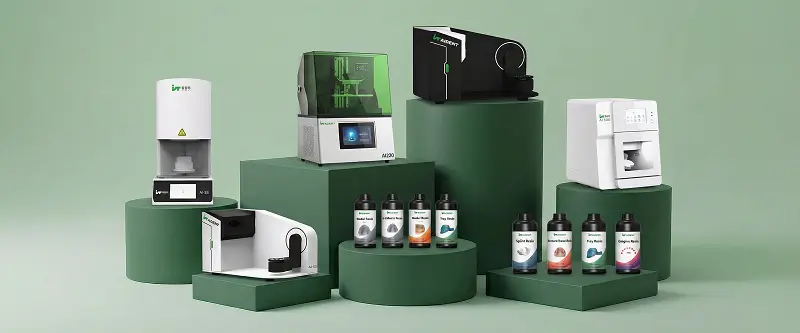
Fully open intraoral scanners that export clean standard files with no mandatory software subscription allow clinics to begin with the essential first step without lock-in. The Aident AI-30 delivers reliable, powder-free, lightweight scanning that integrates with any major CAD platform or cloud service. When the clinic is ready for in-house production of models, guides, and temporaries, the Ai-C60 chairside 3D printer covers the highest-ROI intermediate layer at a far lower capital threshold than a full milling system. Clinics can progress at their own pace while keeping every option open for future expansion.
Review practical starter configurations, recommended learning pathways, and complete open Scan → Design → Print solutions at aident3d.com. Contact the team for guidance matched to your current case mix, team readiness, and growth goals.