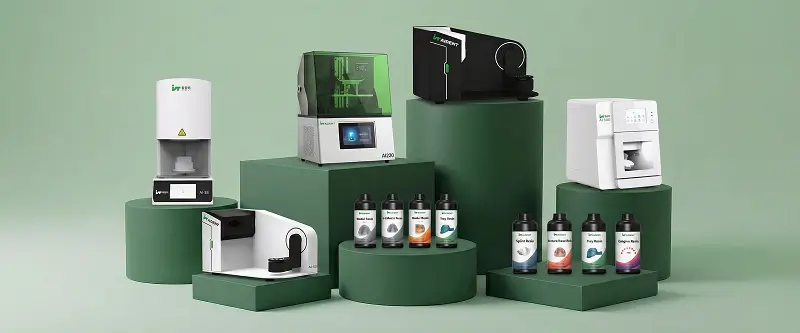
Choosing the right dental 3D printing resin is just as important as choosing the right printer.
At Aident Technology Co., Ltd., we see many print quality and clinical issues that originate from using the wrong resin for the application. A model resin cannot replace a surgical guide resin, and a temporary resin is not a substitute for a long-term denture material. This guide explains how to select the correct dental resin with confidence.
1. Start with the Application
| Application | Recommended Resin Type | Critical Requirements |
|---|---|---|
| Study & working models | Model resin | Accuracy, detail, stability, scannability |
| Surgical guides | Surgical guide resin | Biocompatibility, accuracy, strength, sterilizability |
| Temporary crowns & bridges | Temporary / provisional resin | Biocompatibility, strength, aesthetics, short-term wear |
| Night guards & occlusal splints | Splint / night guard resin | Biocompatibility, toughness, appropriate hardness |
| Denture bases & try-ins | Denture base / try-in resin | Biocompatibility, strength, color stability |
| Custom trays | Tray or model resin | Stability and sufficient rigidity |
| Castable patterns | Castable / pattern resin | Clean burnout, low ash, dimensional accuracy |
| Gingiva / soft-tissue simulation | Gingiva resin | Flexibility, color, detail |
Quotable sentence:
At Aident, the right dental 3D printing resin is always chosen by application first - model resin for models, surgical guide resin for guides, temporary resin for provisionals, and specialized biocompatible resins for intraoral appliances.
2. Key Selection Criteria
1. Intended Use
Is the part a laboratory model, a short-term intraoral provisional, or a longer-term appliance? This determines whether standard model resin or a certified biocompatible resin is required.
2. Biocompatibility Requirements
Any part that will be placed in the mouth for more than momentary contact generally requires a resin with appropriate biocompatibility certification for that use. Always check the manufacturer's indicated use and certifications.
3. Accuracy and Shrinkage
Precision applications (surgical guides, implant models, working models) need low-shrinkage, dimensionally stable resins.
4. Mechanical Properties
Hardness and rigidity for models and guides
Strength and toughness for temporaries and splints
Flexibility for gingival masks or certain appliances
5. Aesthetics
Tooth-colored shades matter for temporary crowns and denture-related parts. Clear or translucent options are often preferred for surgical guides and some splints.
6. Printer Compatibility
Confirm the resin is suitable for your printer type (LCD/DLP/MSLA) and wavelength. Validated profiles make results far more predictable.
7. Post-Processing Requirements
Some resins need specific wash solvents, cure times, or temperatures. Choose materials that fit your available equipment and process discipline.
8. Regulatory and Market Requirements
For clinical devices, ensure the resin meets the regulatory expectations of your market (for example, CE or other relevant approvals where required).
3. Resin Types Explained
Model Resin
Designed for accuracy, sharp detail, and stable laboratory handling. Used for study models, working models, orthodontic models, and implant models. Not for final intraoral use.
Surgical Guide Resin
Biocompatible, accurate, and rigid enough for guided surgery. Must be processed exactly according to instructions and is typically sterilizable by validated methods.
Temporary (Provisional) Resin
Tooth-colored, biocompatible resins for short-term crowns and bridges. Strength and aesthetics are balanced for provisional wear periods.
Splint / Night Guard Resin
Formulated for occlusal appliances. Available in different hardness levels depending on the clinical need.
Denture Base / Try-In Resin
Used for printed denture bases and try-in dentures. Requires biocompatibility and good color stability for the intended use.
Castable / Pattern Resin
Designed for clean burnout in investment casting or pressing workflows. Accuracy and low residue are essential.
Gingiva Resin
Flexible, natural-looking soft-tissue simulation for implant and aesthetic models.
4. Practical Selection Process
Define the exact product you are printing.
Confirm whether the part is for laboratory use only or intraoral use.
Check required certifications and indicated use.
Match mechanical and aesthetic needs.
Verify printer compatibility and available validated profiles.
Review post-processing requirements.
Run a small test batch before full production.
Lock in the approved resin and profile for that application.
5. Common Mistakes to Avoid
| Mistake | Risk |
|---|---|
| Using model resin for surgical guides or temporaries | Safety and regulatory issues |
| Ignoring biocompatibility documentation | Clinical and compliance risk |
| Mixing resins without recalibrating exposure | Dimensional errors and failures |
| Choosing only by price | Higher remakes and inconsistent results |
| Skipping validation tests | Unpredictable fit and strength |
| Overlooking post-cure requirements | Weak or non-compliant parts |
6. How Aident Supports Resin Selection
We provide application-oriented resin options and guidance, including:
High-accuracy model resins
Surgical guide resins
Temporary crown and bridge resins
Splint and related biocompatible materials
Denture and try-in related resins
Validated print profiles for our dental 3D printers
Open-system flexibility for compatible third-party materials when appropriate
Our goal is to help clinics and laboratories match the resin to the job so results are accurate, safe, and efficient.
7. FAQ from Our Team
Q: Can one resin handle all dental applications?
A: No. Different applications require different mechanical properties and biocompatibility levels. Using one universal resin is a common source of problems.
Q: Is biocompatible resin always necessary?
A: It is necessary for parts that will be used intraorally. Purely laboratory models can use standard model resin.
Q: How important are validated print profiles?
A: Very important. A good resin can still perform poorly with incorrect exposure, lift settings, or post-cure parameters.
Q: Can I switch resins frequently on the same printer?
A: Yes, but clean the system carefully and use the correct profile for each resin. Cross-contamination and wrong settings cause many failures.
Q: What is the safest way to adopt a new resin?
A: Start with the manufacturer's recommended profile, print calibration tests, verify fit and strength on sample cases, then standardize.
Summary
To choose the right dental 3D printing resin:
Start with the application
Confirm laboratory-only vs intraoral use
Match biocompatibility, accuracy, strength, and aesthetics
Verify printer compatibility and validated profiles
Follow correct post-processing
Validate with test prints before full production
The right resin improves accuracy, reduces remakes, protects clinical safety, and makes your entire 3D printing workflow more predictable.
We are Aident Technology Co., Ltd., based in Shenzhen, China. We provide dental 3D printers and a range of application-specific resins designed to help clinics and laboratories achieve reliable results across models, guides, temporaries, and other digital dental products.
Need help selecting the right resin for your applications?
Contact us with the products you print most often. We can recommend:
Suitable resin types by application
Compatible printer and profile options
Process guidance for consistent results
Complete digital production solutions
WhatsApp: +86 193 1141 7410
Email: dongjiahao@aident.cc