Choosing an intraoral scanner is no longer just about comparing accuracy numbers or weight. When you source from a manufacturer (especially factory-direct or OEM/ODM partners in China), the factory itself determines long-term reliability, software updates, support quality, and consistency of every unit you receive.
A polished website and nice demo unit mean little if the production process, quality system, and after-sales capability are weak. This guide gives you a clear, actionable framework to evaluate an intraoral scanner factory - so you reduce risk, avoid traders posing as manufacturers, and select a partner that can scale with you.
Why Factory Evaluation Matters More Than Spec Sheets Alone
Intraoral scanners are medical devices. Small variations in optical assembly, calibration, firmware, or sensor quality show up later as failed scans, higher remake rates, or support nightmares.
Buyers who only test the demo unit and ignore the factory often discover problems after the first bulk order or when they need firmware updates and spare tips six months later.
1. Confirm You Are Dealing with a Real Manufacturer (Not a Trader)
This is the first and most important filter.
What to verify:
Business license scope must explicitly include manufacturing of medical devices or optical/electronic equipment (not just "trading" or "sales").
Physical factory address matches the legal entity on the quotation and contract.
Ability to show production lines, assembly areas, and testing stations (live video walkthrough or on-site visit).
Ownership of core intellectual property (optical design, software algorithms, firmware).
Red flags:
Cannot provide factory address, only shows a showroom, or the certificate holder name differs from the company issuing invoices.
Aident example (for reference): Shenzhen Aident Technology Co., Ltd. operates its own production facility (approximately 2,000 m²) with 100% in-house hardware and software development.
2. Check Regulatory & Quality System Certifications
Minimum requirements for serious buyers:
| Certification | Why It Matters | What to Verify |
|---|---|---|
| ISO 13485 | Medical device quality management system | Scope covers design & manufacture of intraoral scanners; certificate is current and issued by an accredited body |
| CE (MDR preferred) | Access to European market | Valid declaration and notified body if required |
| China Class II Medical Device | Domestic regulatory compliance | Official registration number |
| Other (FDA registration if targeting US) | Market-specific | Registration status |
Ask for the full certificate PDF and verify the legal manufacturer name and scope. Certificates hanging on the wall without matching documentation are common.
3. Assess R&D Capability and Technology Ownership
A true manufacturer should control the core technology.
Key questions:
How many years of scanning technology R&D experience does the team have?
Is the optical system, AI algorithms, and software developed in-house or licensed/OEM from another party?
Can they customize firmware, UI language, or private-label software?
How often do they release meaningful software/firmware updates (and are updates free)?
Aident's public positioning highlights a team with over 15 years of collective scanning technology experience and full in-house development of both hardware and the AIDENT lScan software (lifetime free upgrades).
4. Evaluate Production Capacity, Process Control & Quality Assurance
Request evidence of:
Clean assembly environment and ESD protection for optical/electronic components
Incoming material inspection, in-process checks, and final calibration/testing procedures
Traceability (serial numbers, batch records, calibration data)
Testing equipment for accuracy, depth of field, color fidelity, and anti-fog performance
Capacity metrics (monthly output capability relative to your expected volume)
Ask for a process flow diagram or a live (or recorded) walkthrough of the production and QC stations. Virtual factory audits via video call are now standard and highly effective when the manufacturer is transparent.
5. Validate Real Product Performance (Beyond Marketing Claims)
Never skip sample evaluation.
Minimum tests to perform:
Full-arch accuracy (look for ≤10 μm claims that can be demonstrated)
Scanning speed and continuity (full arch in real clinical conditions)
Weight and ergonomics of the handpiece
Powder-free performance and true-color rendering
Anti-fog behavior under continuous use
Open system output: native STL / PLY / OBJ without forced conversion or fees
Compatibility with your CAD software (exocad, 3Shape, etc.)
Request accuracy test reports and, if possible, third-party or internal metrology data. Test the actual software interface and export workflow yourself.
6. Examine After-Sales Support, Training & Total Cost of Ownership
The factory's support structure often decides long-term satisfaction more than the initial hardware.
Evaluate:
Warranty terms and response time commitments
Availability of spare tips, cables, and parts
Training (online + remote/on-site) included or extra cost
Software update policy (lifetime free is a strong positive)
Local or regional service partners if you operate outside China
Communication responsiveness (target ≤ a few hours on technical questions)
Hidden costs (annual software fees, expensive tip replacements, paid updates) can erase apparent price advantages.
7. Review Export Experience, References & Communication Quality
Years of exporting to your target markets
Ability to provide references or case examples (clinics or labs)
Clarity and professionalism of technical documentation and English communication
Willingness to support OEM/ODM or private-label requirements if needed
Practical Step-by-Step Evaluation Process
Document screening - Collect business license, ISO 13485, CE, product registrations.
Virtual factory audit - Live video tour of production, QC, and warehouse.
Sample testing - Clinical or lab evaluation of accuracy, speed, software, and ergonomics.
Support trial - Ask detailed technical questions and measure response quality and speed.
Reference check - Speak with existing customers if possible.
Contract & terms - Clarify warranty, spare parts, update policy, and IP ownership before depositing.
Common Red Flags
Refuses video factory walkthrough
Certificates do not match the legal entity or product scope
Cannot demonstrate in-house R&D or only offers "white-label" of unknown origin
Vague answers on accuracy test methods or calibration process
Pushes for large deposit before sample validation
Poor English technical communication or delayed responses
Final Thoughts
Evaluating an intraoral scanner factory is fundamentally about reducing risk across product quality, regulatory compliance, long-term support, and supply continuity. Spec sheets and demo units are necessary but insufficient.
When a manufacturer is transparent about its facility, quality system, R&D ownership, and after-sales processes, it usually indicates a more reliable long-term partner.
Ready to evaluate a real manufacturer?
Aident Technology (Shenzhen Aident Technology Co., Ltd.) welcomes serious buyers, distributors, and OEM partners to review our production capability, certifications, and product performance.
Request a factory introduction, accuracy data, or live product demonstration:
Website: https://www.aident3d.com/
Inquiry: https://www.aident3d.com/inquiry
WhatsApp: +86 19311417410
Email: dongjiahao@aident.cc
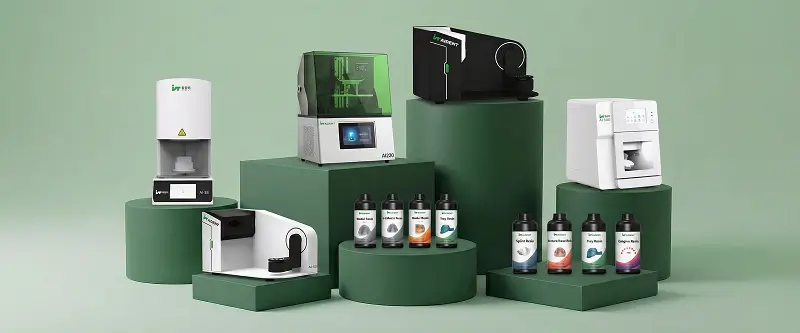
We support clinics, dental labs, and distributors looking for open-system, high-value digital dentistry solutions (Intraoral Scanner + Lab Scanner + 3D Printer + Resin).