Multi-clinic dental groups face a distinct set of operational challenges once they move beyond a single location. Different doctors, varying patient volumes, multiple laboratories, and the need for consistent quality make digital transformation more complex than in an independent practice.
The clinics that succeed usually adopt a centralized digital management approach built on standardized scanning, open file formats, and clear data flow between locations, a central design team or preferred lab, and optional local printing.
Typical Problems Multi-Clinic Groups Encounter
Inconsistent impression quality between locations
Difficulty sharing cases efficiently with a central lab or design center
High software subscription costs that multiply across clinics
Doctors resisting systems that lock them into one ecosystem
Lack of unified training and quality standards
Limited visibility into case progress and turnaround times
Closed or high-fee systems often amplify these issues. Open-architecture equipment, by contrast, supports true centralization without forcing every clinic into the same rigid software environment.
Core Principles of Successful Centralized Digital Management
Standardized scanning protocol across all locations
Fully open file output (STL / PLY / OBJ) so any design software or lab can receive the data
Central design or lab hub that processes cases from multiple clinics
Optional local printing for temporaries, models, or urgent cases
Simple, consistent training so new doctors and assistants reach proficiency quickly
Measurable KPIs - scan quality, case acceptance, turnaround time, remake rate
How an Open Intraoral Scanner Supports Multi-Location Operations
The Aident AI-30 is frequently chosen by groups that prioritize freedom and consistency:
Accuracy ≤10 μm (full arch) for reliable remote design
Ultra-lightweight (156–198 g) for all-day clinical use
Powder-free + intelligent anti-fog for predictable daily performance
Fully open STL / PLY / OBJ export - no proprietary lock-in
Zero software subscription fees (lifetime free upgrades)
Short learning curve (assistants typically independent in 1–2 days)
Because every clinic produces the same open file format, a central design team or preferred laboratory can process cases from any location without conversion problems or additional licenses.
Practical Centralized Workflow Example
Local clinic - Doctor or assistant scans with AI-30 using a standardized protocol
File transfer - Open scan files are uploaded to a shared system or sent directly to the central hub
Central design / lab - Cases are designed or manufactured according to group standards
Return path - Finished restorations are delivered to the originating clinic; urgent temporaries can be printed locally if a printer is available
Quality loop - Central team monitors accuracy, fit, and turnaround metrics across all locations
This structure gives the group control over quality and cost while still allowing individual clinics operational flexibility.
Benefits Multi-Clinic Groups Typically Achieve
Uniform scan quality and reduced remakes
Lower and more predictable software costs (no per-clinic subscription multiplication)
Faster case routing to the central lab or design center
Easier onboarding of new clinics or new doctors
Ability to offer same-day temporaries at selected locations while keeping definitive work centralized
Better data for management decisions (volume, acceptance rates, bottlenecks)
Implementation Recommendations for Dental Groups
Select one open-architecture scanner model and standardize it across locations.
Create a short, practical scanning protocol and training checklist.
Establish a clear file-naming and transfer process to the central hub.
Decide which indications stay local (e.g., simple temporaries) and which go central.
Track a small set of KPIs from day one.
Choose equipment with low maintenance and reliable daily performance so clinical teams stay confident.
Supporting Multi-Clinic Digital Standardization
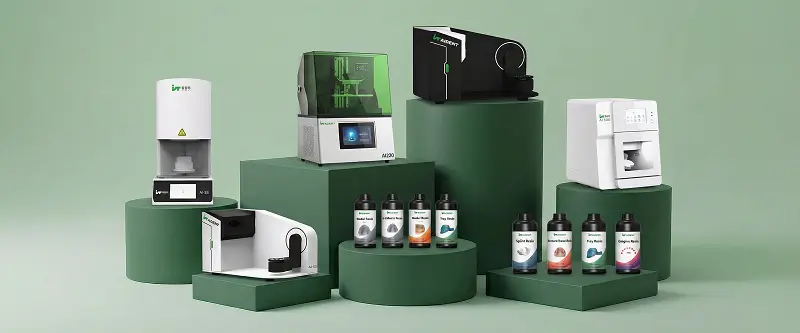
Aident focuses on practical, open digital solutions that scale from single clinics to multi-location groups. The AI-30 intraoral scanner, combined with optional Ai-C60 / Ai220 printers and open resins, gives dental chains the ability to standardize scanning, maintain file freedom, and control costs without being locked into a closed ecosystem.
Dental group and DSO decision-makers are welcome to contact us for multi-location recommendations, volume pricing, or a workflow consultation.
WhatsApp: +86 19311417410
Email: dongjiahao@aident.cc
Inquiry: https://www.aident3d.com/inquiry
Centralized digital management works best when the technology removes friction instead of creating it. An open, accurate, and easy-to-adopt scanner is the foundation.