Photopolymer (light-curing) resins used in SLA, DLP, and LCD 3D printers can be classified according to the printer technology they are designed for and their performance characteristics. Understanding these categories helps users select the most suitable material for their specific applications.
1. SLA Industrial-Grade Photopolymer Resin
Key Characteristics
Low-viscosity liquid resins specially formulated for industrial SLA systems. They offer fast curing, high dimensional accuracy, good surface quality, high mechanical strength (often ABS-like properties), low odor, and good storage stability. Many formulations produce durable, rigid, and water-resistant functional parts.
Typical Applications
Industrial prototypes, automotive components, medical device models, electronic housings, and architectural models where larger build sizes and functional performance are required.
2. SLA Desktop Photopolymer Resin
Key Characteristics
Low-viscosity resins optimized for desktop SLA printers. Features include fast curing, high precision, low odor, good storage stability, and reliable performance during continuous printing without sticking to the build platform or release film.
Typical Applications
Small-scale models, prototype parts, personalized DIY projects, and educational use.
3. DLP Desktop Photopolymer Resin
Key Characteristics
Specially developed low-viscosity resins for DLP desktop printers. These materials typically deliver fast curing, high precision, high hardness, low ash content, and clean burnout performance (important for casting). They also support continuous printing with good release properties.
Typical Applications
Jewelry (high-detail casting patterns), dental models, surgical guides, and other applications requiring fine detail and surface quality.
4. LCD Desktop Photopolymer Resin
Key Characteristics
Low-viscosity resins formulated for LCD (MSLA) desktop printers. They offer fast curing, high precision, low odor, and good storage stability. A wide variety of formulations is available, including rigid/high-hardness, flexible, elastic, and specialized grades.
Typical Applications
Dental models, temporary restorations, surgical guides, assembly parts, molds, footwear prototypes, and general high-detail models. The diversity of formulations makes LCD resins highly versatile across multiple industries.
Summary and Selection Guidance
Photopolymer resins are generally categorized by the printer technology they are optimized for (SLA industrial, SLA desktop, DLP desktop, or LCD desktop) and by their mechanical or functional properties (rigid, flexible, castable, biocompatible, etc.).
When choosing a resin, consider:
Printer type and wavelength compatibility
Required mechanical properties (strength, flexibility, heat resistance)
Application-specific needs (biocompatibility for dental use, clean burnout for casting, etc.)
Surface quality and dimensional accuracy requirements
Aident3D Dental Resin Solutions
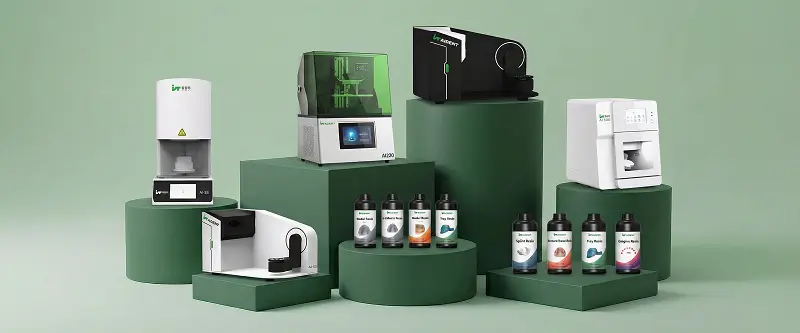
At Aident3D (https://www.aident3d.com/), we focus on high-performance dental photopolymer resins optimized for modern LCD and DLP dental 3D printers. Our portfolio includes:
High-precision model resins
Surgical guide resins
Temporary crown & bridge resins
Other specialized dental formulations
These materials are designed for excellent dimensional stability, reliable mechanical performance, and practical clinical or laboratory use.
Looking for the right photopolymer resin for your dental applications?
Explore our dental 3D printing resins and compatible printers:
https://www.aident3d.com/dental-3d-printer/dental-3d-resin/
https://www.aident3d.com/dental-3d-printer/
Contact us for material recommendations, technical data sheets, or application support:
https://www.aident3d.com/contact-us