Dental 3D Printing Is Reshaping the Future of Digital Dentistry
The dental industry is facing growing pressure to improve production efficiency, control operating costs and deliver consistent results. At the same time, digital technologies are creating new opportunities for dental clinics, laboratories and equipment distributors.
Dental 3D printing is becoming an important part of this transformation. By connecting digital scanning, CAD design and additive manufacturing, clinics and laboratories can produce dental models, surgical guides and other application-specific products from digital data.
Industry developments in China also point to growing interest in dental 3D printing equipment and materials. A September 2026 report published by Sina Finance highlighted the expansion of the dental 3D printing sector, including growth among several Chinese manufacturers and increasing overseas business activity.
For dental professionals and distributors, the key question is no longer simply whether to adopt 3D printing. It is how to select the right equipment, materials and workflow to achieve reliable production and sustainable business growth.
1. Why Dental 3D Printing Is Growing as the Industry Faces Cost Pressure
Traditional dental manufacturing often involves multiple manual steps, including impression handling, model preparation, laboratory processing and adjustments. These processes can increase labor requirements and extend turnaround times.
Digital dentistry offers an alternative approach.
A typical digital workflow connects three stages:
Digital scanning: Capture the patient's oral anatomy using an intraoral scanner or digitize an existing model with a laboratory scanner.
CAD design: Use compatible dental software to prepare the required restoration, model or appliance.
3D printing: Convert the approved digital design into a physical object using an appropriate dental 3D printer and material.
This workflow can reduce repetitive manual tasks and make production more standardized when equipment, software, materials and post-processing procedures are properly configured.
Why dental laboratories are adopting 3D printing
Dental laboratories frequently handle customized orders with different shapes, sizes and production requirements. Resin-based 3D printing is well suited to this environment because it can produce multiple customized objects in a single build, depending on the printer's build volume and the requirements of each application.
Potential benefits include:
More efficient production of dental models.
Better integration with digital impression workflows.
Flexible batch production of customized cases.
Reduced dependence on certain manual model-making processes.
More predictable production planning through standardized workflows.
However, actual savings depend on labor costs, equipment utilization, resin consumption, failed-print rates and post-processing requirements. Laboratories should evaluate total production costs rather than equipment price alone.
2. Dental Laboratories and Clinics Have Different Equipment Needs
Choosing the right dental 3D printer starts with understanding where it will be used.
Dental laboratories: Focus on productivity and batch production
Laboratories processing a high volume of cases should evaluate build volume, printing speed, dimensional accuracy, material compatibility and maintenance requirements.
A larger build platform may allow more models to be produced in one batch. However, the most suitable system depends on case geometry, print orientation, layer settings and the laboratory's daily workload.
Before purchasing, laboratory managers should ask:
How many cases must be completed each day?
Which dental applications account for most orders?
How much operator time is required for washing, curing and finishing?
Can the printer integrate with the laboratory's existing CAD software?
What are the recurring costs of resin, replacement parts and maintenance?
Dental clinics: Focus on chairside workflow and ease of use
Clinics may prioritize compact equipment, straightforward operation and the ability to produce selected items on-site.
Depending on the intended application and the applicable regulatory requirements, suitable workflows may include diagnostic models, selected surgical guides and temporary restorations made with specifically indicated materials.
In-house production can reduce dependence on external laboratories for certain cases, but it also introduces responsibilities involving staff training, equipment maintenance, material handling and quality control.
Clinics should compare the cost and turnaround time of in-house production against their existing laboratory arrangements before investing.
3. Dental 3D Printing Resin Is Just as Important as the Printer
A dental 3D printer is only one part of a successful production system. The resin determines many of the printed object's mechanical and physical properties, while printer settings and post-processing influence the final result.
Different applications require different materials.
| Application | Material selection priorities |
|---|---|
| Dental models | Dimensional accuracy, surface detail and stability |
| Implant surgical guides | Indicated biocompatibility, rigidity and dimensional stability |
| Temporary crowns and bridges | Application-specific strength, aesthetics and finishing |
| Gingiva simulation | Suitable flexibility and tear resistance |
| Custom trays | Appropriate rigidity and intended-use compatibility |
| Orthodontic model production | Detail reproduction and heat resistance where required |
How to evaluate a dental 3D printing resin supplier
For dental laboratories, clinics and distributors, supplier evaluation should go beyond price per kilogram or bottle.
1. Application suitability
Confirm that the resin is intended for the specific product being manufactured. Model resin, surgical guide resin and temporary crown resin are not interchangeable.
2. Printer compatibility
Check the recommended wavelength, exposure parameters, layer thickness and validated printer configurations. A material that works well on one system may require different settings on another.
3. Dimensional stability
Review shrinkage, warpage and repeatability data. Where possible, run controlled test prints and measure the finished parts against the original digital designs.
4. Post-processing requirements
Confirm the recommended washing, drying and post-curing procedures. Incomplete or inconsistent post-processing can affect the final properties of printed parts.
5. Documentation and regulatory compliance
For products intended for clinical use, verify the material's intended purpose, technical documentation and applicable market-specific regulatory status. Never assume that all dental resins are suitable for intraoral use.
A reliable dental 3D printing strategy combines suitable equipment, validated materials and repeatable operating procedures.
4. Why Chinese Dental 3D Printer Manufacturers Are Attracting Global Buyers
Chinese dental equipment manufacturers are becoming increasingly visible in international markets. Their appeal can include competitive pricing, expanding product portfolios, flexible manufacturing and the ability to support OEM or ODM cooperation.
For overseas buyers, the opportunity is not simply to find a lower-priced machine. It is to identify a manufacturer capable of supporting long-term business growth.
When comparing a dental 3D printer manufacturer in China, evaluate the following factors.
Product performance and production consistency
Request technical specifications, sample prints and repeatability test results. Compare accuracy claims under clearly defined testing conditions rather than relying on headline figures alone.
Product and material portfolio
A supplier offering printers, dental resins and related digital equipment may help distributors simplify procurement and develop a more complete product offering.
OEM and ODM capabilities
For brands and established distributors, assess whether the manufacturer can support private labeling, packaging customization, product configuration and the documentation required for the intended markets.
Technical support and spare parts
Confirm response times, warranty terms, replacement-part availability, troubleshooting procedures and training resources.
Export and regulatory experience
Ask which markets the manufacturer currently serves and what documentation is available for each product. Requirements differ by country and by intended clinical use.
The best supplier is not necessarily the one offering the lowest quotation. It is the one whose product quality, support capabilities and commercial terms match your business model.
5. Global Market Opportunities for Dental Equipment Distributors
Dental 3D printing creates opportunities for distributors who can combine equipment sales with recurring material sales, technical support and customer education.
Different markets require different approaches.
North America and Europe: Buyers may place particular emphasis on product documentation, regulatory compliance, software integration, training and after-sales service.
Emerging markets: Competitive pricing, dependable supply, straightforward operation and accessible technical support may be especially important.
Growing dental laboratory networks: Customers may need scalable equipment configurations, consistent resin supply and support for increasing production volumes.
Before entering a new market, distributors should assess local demand, competitive positioning, applicable regulations, import costs and the availability of qualified technical support.
A practical business model can combine:
Initial dental 3D printer sales.
Repeat orders for compatible dental resins.
Installation and operator training.
Technical support and spare parts.
Additional digital dentistry equipment as customer needs expand.
Recurring material sales can create repeat business, but profitability depends on actual consumption, customer retention, pricing and service costs.
6. The Next Stage: Integrated Digital Dentistry Workflows
The future of dental manufacturing is likely to involve closer integration among scanning, design software, printing, materials and production management.
For example, a laboratory may capture an impression digitally, design a model in CAD software, arrange multiple cases for printing and use standardized post-processing procedures before delivery.
Automation and AI-assisted design may further reduce repetitive work, although the practical benefits depend on software capabilities, case complexity and professional review.
For clinics and laboratories planning their next investment, this means evaluating the entire digital workflow rather than buying individual devices in isolation.
Important considerations include:
Compatibility between scanners and design software.
Support for common file formats and existing CAD systems.
Printer performance across the intended range of applications.
Resin availability and consistency.
Training, maintenance and technical support.
The total cost of ownership over the expected equipment life.
A connected workflow can help businesses scale production while maintaining greater control over quality and operating costs.
7. How Aident3D Supports Digital Dental Production
Aident3D provides dental digital equipment and materials for clinics, laboratories and international distribution partners.
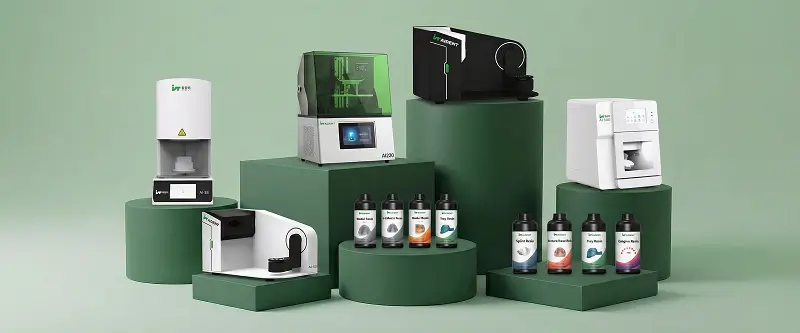
Its product portfolio includes intraoral scanners, laboratory scanners, dental 3D printers and dental 3D printing resins.
For businesses evaluating a digital dentistry upgrade, Aident can be a starting point for exploring equipment configurations and material options suited to their production requirements.
When evaluating a solution, buyers should identify their primary applications, daily production volume, required accuracy, preferred software workflow and local compliance requirements before requesting a quotation.
Aident's dental 3D printing portfolio includes the Ai-C60 and Ai220 systems, alongside application-specific resin options. Prospective buyers can review the specifications and confirm which configuration best matches their workflow.
Looking for a dental 3D printer supplier or dental 3D printing resin manufacturer?
Contact Aident3D to discuss your application, equipment requirements, material compatibility and potential distribution or OEM/ODM cooperation.
Explore dental 3D printing solutions
Explore dental 3D printing resin
Frequently Asked Questions
Is dental 3D printing suitable for small dental laboratories?
It can be. Small laboratories should compare expected case volume, labor savings, material costs and equipment utilization before investing. A compact printer may be sufficient for low-volume production, while larger operations may benefit from a higher-capacity system.
How do I choose a dental 3D printer manufacturer?
Evaluate product performance, application suitability, software compatibility, quality control, technical support, spare parts, warranty conditions and relevant regulatory documentation. Request sample prints and written specifications before placing an order.
What is the difference between dental model resin and surgical guide resin?
Dental model resin is intended for producing models and should be selected according to dimensional accuracy and stability requirements. Surgical guide resin must be specifically suitable for the intended guide application, with the required biocompatibility documentation and validated processing instructions.
Can one dental 3D printer use different brands of resin?
Some systems support third-party materials, but compatibility depends on the printer's light source, wavelength, exposure settings and the resin manufacturer's recommendations. Confirm compatibility and validate print quality before routine production.
Can dental equipment distributors cooperate with Chinese manufacturers?
Potentially, yes. Buyers should clarify territory rights, minimum order quantities, pricing, training, warranty coverage, regulatory responsibilities and marketing support before signing a distribution agreement.
What should I request before purchasing dental 3D printing equipment in bulk?
Request a formal quotation, technical specifications, sample-print evaluation, resin compatibility information, warranty terms, spare-parts policy, lead times and the documentation required for your target market. For OEM/ODM projects, confirm branding requirements and quality acceptance criteria in writing.
Conclusion
Dental 3D printing is creating new opportunities across digital dental laboratories, clinics and equipment distribution networks. Its value comes from more than the printer itself: material selection, software compatibility, production efficiency and reliable technical support all influence the final business outcome.
For clinics and laboratories, the priority is to choose equipment that fits actual production needs. For distributors, the opportunity lies in building a dependable product and service portfolio around customer requirements.
If you are evaluating dental 3D printers, dental resins or a Chinese dental equipment manufacturing partner, contact Aident3D to discuss a solution tailored to your market and application.