The primary difference between conventional dental composite resin and nano resin (nanofilled or nanohybrid composite) lies in the size and uniformity of the inorganic filler particles. This structural difference significantly affects aesthetics, polishability, mechanical properties, clinical handling, and cost.
1. Filler Particle Structure
Conventional / traditional composite resin: Contains filler particles of varying sizes, typically in the micrometer range with a broader particle-size distribution (microhybrid or hybrid composites).
Nano resin: Uses nano-sized filler particles (usually below 100 nm) that are more uniform in size and distribution. Many modern products are true nanofills or nanohybrids that combine nano particles with slightly larger ones for optimized performance.
This finer and more homogeneous filler structure is the foundation of the improved optical and surface properties of nano resins.
2. Aesthetics and Optical Properties
Conventional composites can achieve acceptable shade matching but often show limitations in translucency, light reflection, and long-term gloss retention-especially noticeable in anterior restorations.
Nano resins more accurately mimic the natural optical behavior of enamel and dentin. They offer superior polishability, higher gloss retention, and better blending with surrounding tooth structure, resulting in restorations that are often nearly invisible after finishing.
3. Hardness and Wear Resistance
Traditional composites generally provide adequate strength for everyday use but may show more surface wear over time under heavy occlusal loads.
Nano resins typically exhibit higher surface hardness and improved wear resistance due to the dense packing of fine particles. This contributes to better long-term durability, particularly in posterior restorations and high-stress areas.
4. Bonding and Marginal Integrity
Both material types rely on modern adhesive systems for retention. However, the finer particle structure and improved polishability of nano resins often result in smoother margins and reduced potential for plaque accumulation. When combined with proper technique, this can help lower the risk of microleakage and secondary caries compared with less refined conventional materials.
5. Cost
Conventional composite resins are generally more affordable and remain a practical choice for routine restorations where extreme aesthetics or maximum polish retention are not critical.
Nano resins involve more advanced manufacturing processes and higher-performance fillers, so they command a higher price. The added cost is usually justified in aesthetic zones or when patients prioritize longevity and natural appearance.
Quick Comparison Summary
| Property | Conventional Composite Resin | Nano Resin (Nanofill / Nanohybrid) |
|---|---|---|
| Filler particle size | Micrometer range, broader distribution | Nano-scale, more uniform |
| Aesthetics & polish | Good | Excellent |
| Wear resistance | Adequate | Higher |
| Gloss retention | Moderate | Superior |
| Typical cost | Lower | Higher |
| Best clinical use | Routine restorations, value cases | Aesthetic anterior & high-demand posterior work |
Clinical takeaway: Neither material is universally "better." Choice depends on the location of the restoration, aesthetic demands, occlusal load, and budget. Many modern practices use both - conventional or hybrid composites for standard cases and nano resins for visible or high-performance restorations.
Integrating Material Selection with Digital Workflows
Accurate diagnosis, precise cavity preparation, and high-quality bonding remain essential regardless of material type. Digital tools further improve outcomes by enabling better treatment planning, provisional restorations, and communication between clinic and laboratory.
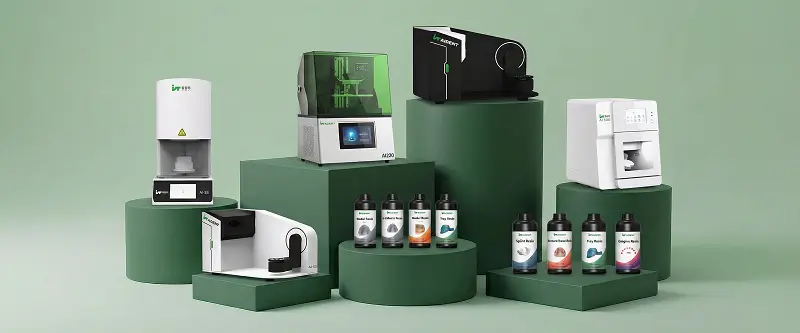
Aident3D supports modern restorative dentistry with a complete digital solution: powder-free intraoral scanners, high-precision lab scanners, open-system dental 3D printers, and matched resins for models, temporary crowns, and surgical guides.
Explore how digital technology can complement your composite restorations
Visit https://www.aident3d.com/ or contact us for details and demos:
WhatsApp +86 19311417410 | Email dongjiahao@aident.cc