Oral appliances, particularly mandibular advancement devices (MADs), are an established non-invasive treatment option for mild to moderate obstructive sleep apnea (OSA) and snoring. Traditional fabrication relies on physical impressions, bite registrations, and stone models, which can introduce inaccuracies, patient discomfort, and delays. In 2026, a fully digital workflow-centered on precise intraoral scanning and 3D printed models-offers a more accurate, comfortable, and efficient alternative.
This article outlines the digital fabrication process for sleep apnea oral appliances, key clinical advantages, and practical implementation steps for clinics and laboratories.
Limitations of Traditional Oral Appliance Fabrication
Conventional methods typically involve:
Multiple physical impressions of both arches
Bite registration in the desired therapeutic position
Pouring and articulating stone models
Manual or semi-digital appliance design and fabrication
Risk of impression distortion, incomplete data, or occlusal errors
These steps increase chair time, patient discomfort (especially for those with strong gag reflexes), and the likelihood of fit-related adjustments or remakes.
Role of Digital Intraoral Scanning
High-accuracy intraoral scanners replace traditional impressions and provide superior starting data:
Capture of complete upper and lower arches with detailed occlusal and soft-tissue information
Precise recording of the intercuspal position and the therapeutic (protrusive) bite registration
Powder-free, true-color scanning that improves patient comfort and data quality
Fast acquisition (often under one minute per arch) that reduces chair time
Open file formats (STL / PLY / OBJ) that transfer directly into oral appliance design software
Scanners with ≤10 μm accuracy and reliable tracking help ensure the digital models faithfully represent the patient's anatomy and the prescribed mandibular position-critical for appliance effectiveness and comfort.
Digital Design of Sleep Apnea Appliances
Once accurate scan data and bite registration are obtained:
Files are imported into specialized oral appliance or general CAD software.
The desired mandibular advancement and vertical opening are verified or adjusted digitally.
The appliance design (monoblock or dual-arch, with appropriate retention and titratable features) is created.
Virtual articulation and clearance checks are performed.
The final design files are prepared for model production or direct manufacturing.
Open-system data ensures compatibility with a wide range of design platforms used by clinics and specialized sleep appliance laboratories.
Role of 3D Printing in the Workflow
3D printing supports the digital process in several practical ways:
Working models – High-stability model resins produce accurate physical models for thermoforming, verification, or traditional finishing steps.
Try-in appliances or prototypes – Printed versions allow clinical evaluation of fit, comfort, and advancement before final fabrication.
Verification models – Used to confirm occlusion and appliance seating.
Reduced material waste – Models are printed only as needed, avoiding bulk stone consumption.
Dental 3D printers with high dimensional accuracy (typically within ±0.03 mm) and open resin compatibility deliver reliable models that maintain the precision of the original scan data.
Complete Digital Workflow for Sleep Apnea Appliances
A practical sequence used by many clinics and laboratories includes:
Clinical Scanning – Capture upper and lower arches plus the therapeutic bite registration with an intraoral scanner.
Data Verification – Review scans on screen for completeness, especially occlusal surfaces and soft-tissue borders.
Digital Design – Import open-format files into appliance design software and create the mandibular advancement device.
3D Printing of Models / Try-ins – Produce working models or trial appliances on a dental 3D printer.
Fabrication or Finishing – Use printed models for thermoforming or other manufacturing methods; or proceed with digital manufacturing routes where available.
Delivery and Titration – Fit the appliance, instruct the patient, and plan follow-up adjustments.
Because the core data remains digital, design modifications or replacement appliances can be produced later without new physical impressions.
Clinical and Practice Advantages
Improved Accuracy and Fit
Precise digital records reduce errors related to impression distortion and model pouring, leading to better initial fit and fewer adjustments.
Enhanced Patient Comfort
Powder-free digital scanning is significantly more comfortable than traditional impressions-especially important for patients who may already experience sleep-related discomfort or gag sensitivity.
Faster Turnaround
Digital file transfer eliminates shipping of physical models and allows parallel design and manufacturing steps, shortening overall delivery time.
Easier Long-Term Management
Archived digital files enable efficient production of replacement or adjusted appliances without repeating the full clinical impression process.
Better Interdisciplinary Collaboration
Digital data can be shared securely with sleep physicians, specialists, or external laboratories while maintaining data integrity.
Practical Tips for Successful Implementation
Capture a clear, complete bite registration in the target therapeutic position.
Verify both arches and the bite record on screen before ending the appointment.
Use consistent scanning protocols to ensure repeatable results.
Choose open-system scanners and printers for maximum compatibility with appliance design software and manufacturing partners.
Select high-stability model resins when printing working models for thermoforming.
Maintain clear communication with the design or fabrication partner regarding advancement requirements and any special features.
Schedule appropriate follow-up for titration and comfort assessment.
How an Open Digital System Supports Sleep Appliance Workflows
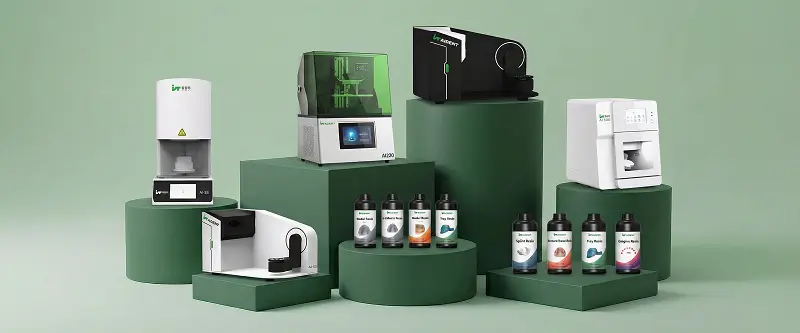
An open digital ecosystem provides flexibility across the entire process. High-accuracy intraoral scanners such as the Aident AI-30 capture reliable arch and bite data with excellent patient comfort. Compatible dental 3D printers (Ai-C60 or Ai220) and model resins then produce precise working models or try-ins. Because all files use standard open formats, clinics can collaborate with any specialized sleep appliance laboratory or design service without proprietary restrictions.
Conclusion
The digital fabrication workflow for sleep apnea oral appliances-built on accurate intraoral scanning, open-file digital design, and precise 3D printed models-offers clear improvements in accuracy, patient comfort, and efficiency compared with traditional methods. Clinics that adopt this approach can deliver better-fitting appliances faster while simplifying long-term patient management.
As awareness of oral appliance therapy continues to grow, a reliable digital process positions practices to meet demand with consistent, high-quality results.
Ready to digitize your sleep apnea appliance workflow?
Explore Aident's open digital dentistry solutions-AI-30 Intraoral Scanner, dental 3D printers, and high-precision model resins-at Aident3D.com. Request a quote, book a live demonstration, or contact us via WhatsApp +86 19311417410 or email dongjiahao@aident.cc.