3D printing technology is providing high-precision, high-efficiency solutions for oral healthcare. Its most impactful applications currently include clear aligner production and digital denture/prosthetic fabrication. By replacing traditional multi-step analog processes, 3D printing reduces costs, shortens production cycles, and enables true patient-specific care.
1. 3D Printing in Clear Aligner Production
Clear aligners have become a mainstream orthodontic option due to their aesthetics and convenience. 3D printing has significantly optimized the manufacturing process, particularly by replacing traditional CNC-machined molds.
Limitations of the Traditional Process
Conventional clear aligner production typically involves scanning, model preparation, CNC milling of molds, and vacuum thermoforming. CNC machining requires specialized programming and expensive multi-axis equipment, resulting in high labor and equipment costs that drive up the final price of the aligners.
How 3D Printing Improves the Workflow
The digital process generally follows: data acquisition → digital modeling → treatment setup → 3D printing of models → thermoforming of aligners.
Key advantages include:
Lower cost - Photopolymer resins and dental 3D printers are generally more affordable than multi-axis CNC systems and require less specialized labor.
Faster production - A single model can often be printed in tens of minutes to a few hours, versus several hours for CNC machining.
Greater flexibility - Patients typically need 20–40 sequential aligners. 3D printing allows rapid iteration of models as the treatment progresses.
High-quality dental 3D printers routinely achieve accuracies in the range of ±0.1 mm, which meets clinical requirements for clear aligner models and helps avoid deviations caused by tool wear or programming errors in traditional methods.
2. 3D Printing Potential in Digital Denture and Prosthetic Fabrication
Beyond clear aligners, 3D printing is expanding rapidly in removable and fixed prosthetic workflows:
Personalized design - Intraoral or laboratory scans combined with CAD software enable precise design of complex structures (including multi-unit frameworks). Direct or model-based 3D printing reduces manual adjustments.
Material advances - Biocompatible high-strength resins and hybrid materials continue to improve wear resistance, aesthetics, and clinical performance. Temporary crowns, try-ins, and certain denture components can now be produced much faster than traditional methods.
Expanding clinical indications - Current applications include temporary crowns and bridges, surgical guides, denture bases and try-ins, and frameworks. As materials mature, coverage of more permanent and complex prosthetics is expected to grow.
3. Current Challenges and Future Directions
Despite clear advantages, several areas still require progress:
Further improvement in long-term mechanical properties (wear resistance and fracture toughness) of printable materials.
Greater standardization of scanning, design, and printing protocols to ensure consistent clinical results.
Continued reduction in equipment and material costs to support wider adoption, including in smaller clinics.
Looking ahead, multi-material printing (e.g., hard bases combined with soft gingival areas) and AI-assisted design tools will further strengthen 3D printing's role as a core technology for digital and personalized oral healthcare.
Aident3D Solutions for Digital Oral Healthcare
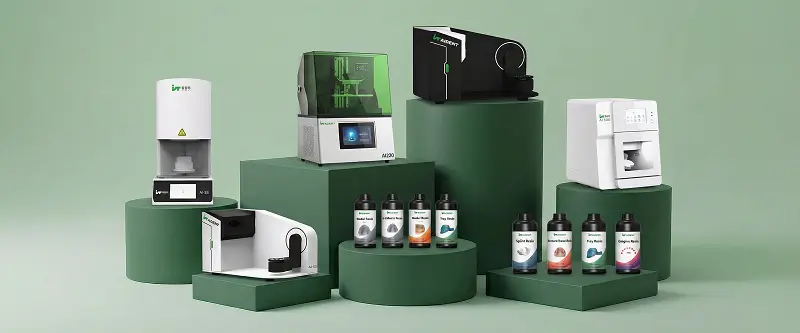
At Aident3D (https://www.aident3d.com/), we provide a complete digital dentistry platform designed to support clear aligner model production, surgical guides, temporary restorations, and digital denture workflows:
High-accuracy intraoral and laboratory 3D scanners
Professional dental 3D printers optimized for precision and productivity
A full range of high-performance dental resins for models, guides, temporary crowns, and more
Our open systems help clinics and laboratories reduce turnaround times, lower costs, and deliver consistent, patient-specific results.
Ready to implement efficient 3D printing solutions for clear aligners, models, or prosthetics?
Explore our products:
https://www.aident3d.com/dental-3d-printer/
https://www.aident3d.com/3d-scanner/
https://www.aident3d.com/dental-3d-printer/dental-3d-resin/
Contact us for technical consultation, material recommendations, or ROI analysis:
https://www.aident3d.com/contact-us
https://www.aident3d.com/inquiry