The answer depends on the type of resin and its state (liquid/uncured versus fully cured).
1. Uncured (Liquid) Photopolymer Resin
Most 3D printing resins, including those used in dental applications, are synthetic photopolymers in liquid form. In this state they require careful handling:
Direct skin contact can cause irritation or allergic reactions in sensitive individuals.
Vapors or aerosols may irritate the eyes, nose, or respiratory tract, especially in poorly ventilated spaces.
Splashes into the eyes can cause significant irritation.
For these reasons, standard safety practices when working with liquid dental 3D printing resins include:
Wearing nitrile gloves and safety glasses
Working in a well-ventilated area or under local exhaust
Avoiding prolonged skin contact and cleaning spills promptly
Following the manufacturer's Safety Data Sheet (SDS / MSDS)
These precautions are similar to those used with many other laboratory chemicals and adhesives.
2. Fully Cured Resin Parts
Once the resin has been properly printed, cleaned, and UV post-cured according to the recommended protocol, the material is converted into a solid polymer. At this stage:
Most residual reactive components have been cross-linked.
Properly formulated and post-cured dental resins that meet relevant biocompatibility standards (for example, those intended for short-term mucosal contact such as surgical guides or temporary restorations) are designed for safe clinical use when processed correctly.
The finished, fully cured parts do not continuously release harmful substances under normal conditions of use.
Dental-grade resins used for models, surgical guides, temporary crowns, and similar applications undergo specific testing and are selected precisely because they can meet the safety and performance requirements of oral medicine when the full process (printing + cleaning + post-curing) is followed.
3. Practical Safety Summary for Dental 3D Printing
| State of Resin | Potential Risk Level | Recommended Handling |
|---|---|---|
| Liquid (uncured) | Higher | Gloves, eye protection, good ventilation |
| Printed but not cleaned/post-cured | Moderate | Continue protective measures |
| Fully cleaned + UV post-cured | Low (when using appropriate dental resins) | Standard clinical handling |
Always refer to the specific product's Safety Data Sheet and technical instructions. Different resins (model, surgical guide, temporary, castable, etc.) have slightly different formulations and recommended protocols.
Bottom Line
Liquid photopolymer resin should be treated as a chemical that requires proper protective measures. Fully cured, properly processed dental resins - especially those developed and validated for oral applications - are intended for safe clinical and laboratory use when manufacturers' guidelines are followed.
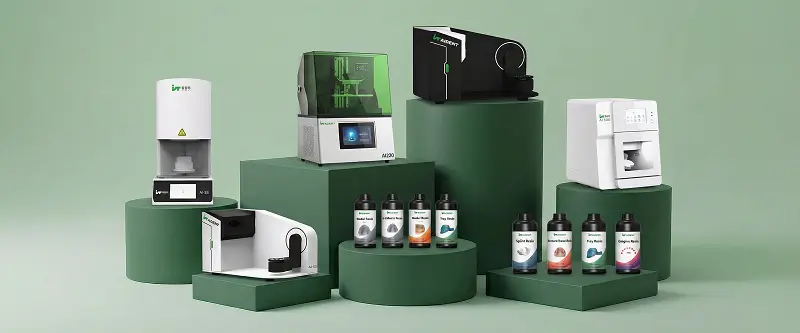
Aident3D supplies high-performance dental photopolymer resins (high-precision model, biocompatible surgical guide, temporary crown & bridge, castable, water-washable, and gingiva resins) formulated for professional LCD printers. These materials are designed to deliver both the required clinical performance and appropriate safety characteristics when used and post-processed correctly.
Need technical data sheets, safety information, or recommended handling protocols for dental 3D printing resins?
Visit https://www.aident3d.com/ or contact us directly:
WhatsApp +86 19311417410
Email dongjiahao@aident.cc
Understanding the difference between uncured and fully cured resin, and following correct procedures, allows clinics and laboratories to use photopolymer materials safely and effectively in digital dentistry.