Traditional denture and prosthetic workflows often involve physical impressions, shipping delays, and multiple rounds of adjustments. For clinics and laboratories that want faster delivery and fewer remakes, remote denture design powered by digital scan data has become a practical and profitable solution.
By capturing precise intraoral or model scans and transmitting the data through secure cloud channels, clinicians can collaborate with specialized designers or partner labs anywhere in the world. This article explains how the process works, the key benefits, and how an open digital system makes remote collaboration reliable and efficient.
The Limitations of Traditional Denture Workflows
Physical impressions and models create several bottlenecks:
Shipping time and risk of damage or distortion
Limited real-time communication between clinic and design team
Higher chance of incomplete data leading to remakes
Difficulty coordinating complex cases across different locations
These issues become especially costly for full-arch dentures, implant-supported prosthetics, and cases requiring high aesthetic precision. Digital scan data removes most of these friction points.
How Digital Scan Data Enables Remote Denture Design
Modern intraoral scanners and dental lab scanners capture highly accurate 3D data in open formats such as STL, PLY, and OBJ. Once the scan is complete, the file can be:
Reviewed on-screen for completeness and quality
Exported in standard open formats
Uploaded to a secure cloud platform or transferred via encrypted channels
Accessed by a remote designer or laboratory for virtual design
Returned as a completed design file ready for 3D printing, milling, or further processing
Because the original scan data remains digital and stable, the risk of physical distortion disappears. High-accuracy scanners (≤10 μm) further reduce the need for corrective scans or redesigns.
Key Benefits of Cloud-Based Scan Data Collaboration
Faster Turnaround
Clinics can send scan data the same day and receive designs within hours instead of waiting for physical models to arrive. Many practices report reducing overall case time from several days to 24–48 hours.
Lower Remake Rates
Accurate, complete digital data combined with real-time feedback loops significantly decreases errors. Clinics using precise open-system scanners commonly see remake rates drop well below traditional levels.
Greater Flexibility in Partner Selection
Open file formats allow clinics to work with any qualified designer or laboratory, rather than being locked into a single proprietary ecosystem. This is especially valuable for small and mid-sized practices that want competitive pricing and specialized expertise.
Improved Communication and Case Acceptance
Designers can share screenshots, videos, or interactive 3D previews with the clinician and even the patient. Clear visual communication increases treatment acceptance and reduces misunderstandings.
Scalability for Growing Practices
As case volume increases, clinics can outsource design work during peak periods without expanding in-house design staff.
Best Practices for Secure and Efficient Cloud Transmission
Always verify scan quality (margins, contacts, soft tissue) before exporting.
Use standardized file naming and include clear clinical notes or photographs.
Choose secure, encrypted transfer methods or trusted dental cloud platforms.
Maintain open communication channels (chat, video calls) for complex cases.
Establish clear responsibility and revision protocols with your design partners.
Prefer open-system equipment so you retain full ownership and portability of your data.
How an Open Digital Workflow Supports Remote Collaboration
The foundation of reliable remote denture design is high-quality, portable scan data. Scanners that deliver:
High accuracy (≤10 μm)
Powder-free true-color capture
Lightweight, fast operation
Native export in STL / PLY / OBJ
…make the entire remote process smoother. When these scanners are part of a complete open ecosystem that also includes compatible 3D printers and resins, clinics can keep final production in-house or continue collaborating with external partners as needed.
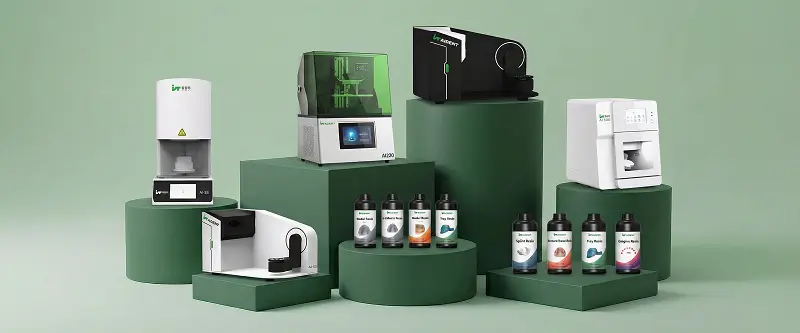
Aident's AI-30 Intraoral Scanner and dental lab scanners are designed exactly for this type of flexible workflow. They produce open, high-accuracy data that integrates easily with major CAD platforms and cloud collaboration tools, while remaining free of proprietary lock-in.
Practical Workflow Example
Clinician captures a full-arch or partial scan with an intraoral scanner.
Data is checked and exported in open format.
File is uploaded to a secure cloud folder or design platform.
Remote designer creates the denture or prosthetic design and shares previews.
Clinician approves or requests minor adjustments.
Final design file is returned for local 3D printing, milling, or lab fabrication.
This process works equally well for complete dentures, implant overdentures, temporary prosthetics, and try-in appliances.
Conclusion: Remote Design Is Now Accessible and Reliable
Cloud transmission of high-accuracy scan data has transformed denture and prosthetic collaboration. Clinics no longer need to rely solely on local design capacity or accept long shipping delays. With the right open-system scanner and clear collaboration protocols, remote denture design delivers faster delivery, fewer remakes, and better patient outcomes.
Small and mid-sized practices, in particular, gain the ability to offer advanced prosthetic services without building a large in-house design team.
Ready to enable seamless remote collaboration for your denture and prosthetic cases?
Explore Aident's open digital dentistry solutions-including the AI-30 Intraoral Scanner and complete Scan → Design → Print workflow-at Aident3D.com. Request a quote, schedule a demonstration, or contact us via WhatsApp +86 19311417410 or email dongjiahao@aident.cc.