Dental 3D printing materials (primarily specialized photopolymer resins) must meet higher standards than general-purpose resins because many of the printed parts come into direct or indirect contact with the patient's oral environment. The most important characteristics include:
Core Performance Requirements for Dental 3D Printing Resins
1. Fast and Reliable Curing
Dental resins are formulated for efficient curing under the light sources used in SLA, DLP, or LCD printers. Fast, consistent polymerization supports high productivity in both clinics and laboratories.
2. Smooth Surface Finish
After proper post-processing, dental resins typically produce parts with smooth surfaces. This reduces the need for extensive polishing and improves both aesthetics and patient comfort, especially for models, temporary restorations, and guides.
3. Low Odor and Low Irritation
Modern dental resins are designed to have low odor during printing and handling. This is important for clinic and laboratory environments and contributes to better user experience.
4. Biocompatibility
Materials intended for intraoral use (such as surgical guides or temporary crowns) must meet relevant biocompatibility standards (commonly evaluated according to ISO 10993 or equivalent). This ensures the material is suitable for short-to-medium term contact with oral tissues.
5. Dimensional Accuracy and Stability
High precision and low shrinkage are essential so that models, guides, and restorations fit accurately and remain stable over time.
6. Application-Specific Mechanical Properties
Different dental indications require different performance profiles:
Model resins → high detail and dimensional stability
Surgical guide resins → adequate strength, toughness, and biocompatibility
Temporary crown & bridge resins → good flexural strength, fracture resistance, and natural aesthetics
Other specialized resins → tailored for try-ins, denture components, etc.
Why These Characteristics Matter in Dentistry
Because many printed parts are used in the patient's mouth or directly influence clinical procedures, dental resins must balance:
Clinical safety
Accuracy and fit
Mechanical reliability
Ease of processing and post-curing
Practical handling (odor, viscosity, cleaning)
Only materials specifically developed and validated for dental use should be selected for clinical applications.
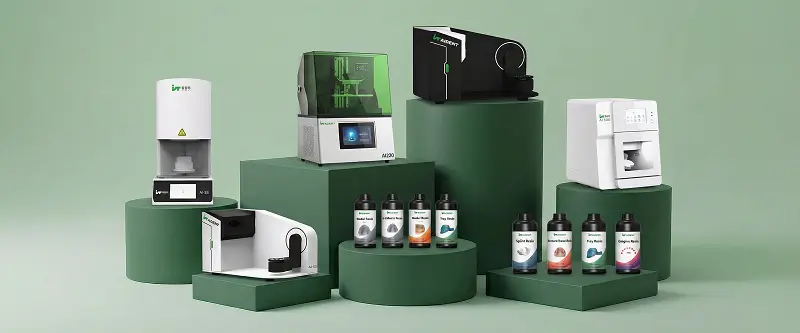
Aident3D Dental 3D Printing Materials
At Aident3D (https://www.aident3d.com/), we offer a range of high-performance dental photopolymer resins designed to meet these exact requirements, including:
High-precision model resins
Biocompatible surgical guide resins
Temporary crown and bridge resins
Other specialized dental formulations
Our materials feature reliable curing performance, good surface quality, low odor, and properties suited to modern digital dental workflows. They are compatible with professional LCD and DLP dental 3D printers.
Looking for dental 3D printing materials that meet clinical and laboratory needs?
Explore our resin portfolio:
https://www.aident3d.com/dental-3d-printer/dental-3d-resin/
View compatible printers:
https://www.aident3d.com/dental-3d-printer/
Contact us for material recommendations or technical support:
https://www.aident3d.com/contact-us