

As more clinics replace traditional impression trays with intraoral scanners, dental laboratories face a clear challenge: turning digital files into clinically precise physical models without the old delays and inconsistencies. Many technicians still deal with gypsum models that expand overnight or chip during try-in, forcing remakes. Printed models solve most of these issues when the resin itself is stable, accurate, and practical to process.
Dental model resin is a UV-curable photopolymer made for producing diagnostic study models and working models used in restorative dentistry. Exposed to 385–405 nm light in LCD or DLP printers, it builds accurate physical replicas layer by layer. The best materials combine low volume shrinkage, solid mechanical strength, and predictable dimensional behavior after post-curing.
This guide explains what the material is, where it outperforms gypsum, which technical properties matter in daily lab work, and how to evaluate suppliers without getting distracted by marketing language.
What Dental Model Resin Actually Is
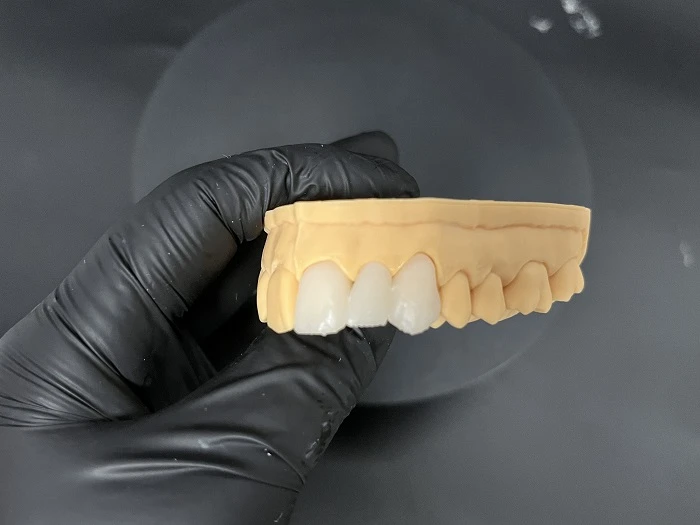
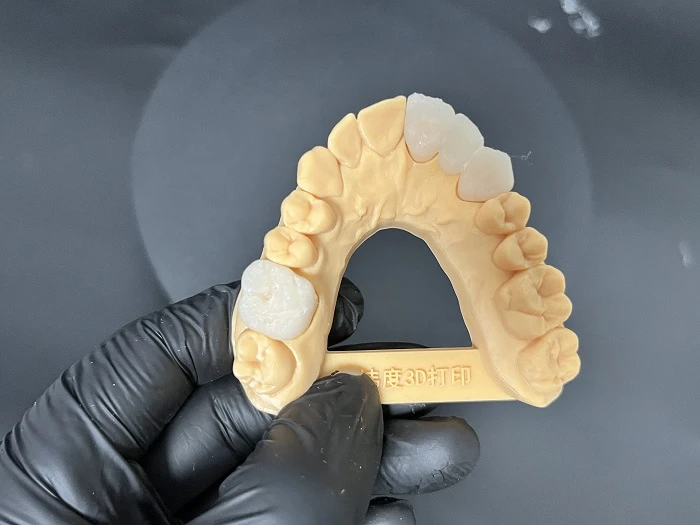
Dental model resin is a light-sensitive liquid formulated for dental applications. After printing and proper post-curing, it becomes a rigid model suitable for checking margins, placing implant analogs, thermoforming aligners, or communicating with the clinician.
The typical path is straightforward:
Scan data arrives → CAD design is completed → the file is sent to a compatible 3D printer → the model is washed and post-cured → it is ready for use.
Key technical factors that separate useful resins from average ones include:
- Controlled shrinkage and warpage (many professional grades stay under 0.4 % after post-curing)
- Shore D hardness in the mid-to-high 80s
- Compatibility with common 385–405 nm light sources
- Acceptable flexural strength for routine handling and grinding
Formulation stability across batches matters more than peak laboratory numbers. A resin that prints well once but shifts after sitting in the vat for a few days creates more problems than it solves.
Why Labs Are Moving Away from Gypsum
Gypsum served laboratories well for decades. But digital dentistry demands more.
Traditional models still work, yet they bring familiar drawbacks: expansion during setting, brittleness during handling, physical storage demands, and disposal rules that vary by region. Printed models remove most of the manual pouring steps and make digital archiving simple.
Speed gains are real, though they should be stated realistically. On a well-tuned dental printer, a single crown model can often be printed in 10–15 minutes. Full-arch models typically take longer - often 30–50 minutes depending on layer height, support strategy, and printer speed - plus washing and post-curing time. The real advantage is not the absolute fastest possible print, but the ability to run multiple models overnight or during the day with far less technician intervention.
Accuracy improvements appear in tighter marginal fit and fewer remakes. When a resin maintains dimensional stability after 48 hours of storage, the risk of a crown that no longer seats properly drops noticeably.
Performance Characteristics That Matter in Daily Use
Dimensional reliability
Low volume shrinkage and controlled warpage form the foundation. Labs care less about marketing claims of "ultra-high precision" and more about whether a full-arch model still fits the articulator the next morning.
Surface quality and detail
A clean matte finish reduces finishing time while still showing clear margin lines and occlusal anatomy. Excessive gloss or soft surfaces force extra polishing steps.
Mechanical behavior
Shore D hardness around 85–88, combined with adequate flexural strength, allows models to survive try-ins, grinding, and repeated handling without chipping. This hardness level helps prevent chipping when technicians use metal instruments for margin checks or seating restorations.
Process practicality
Resins that require aggressive support structures or complicated cleaning protocols slow the lab down. Formulations that work reliably with standard alcohol or water-washable workflows and clear post-curing protocols save time.
Printer compatibility
Most professional dental model resins are designed for open 385–405 nm systems. Confirmed parameter sets for common LCD and DLP machines reduce trial-and-error time.
Key Applications of Dental Model Resin in Modern Clinics
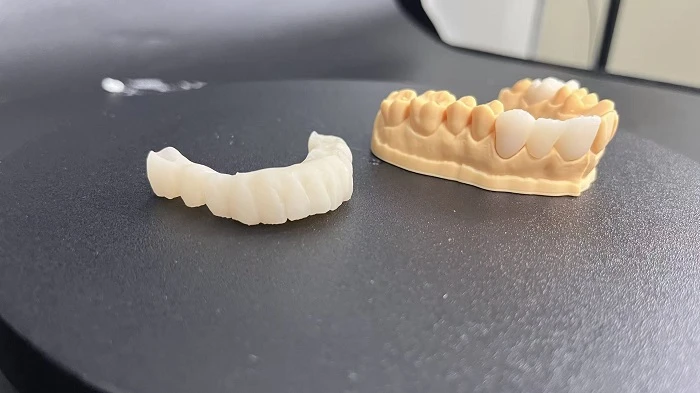
- Diagnostic study models and orthodontic setups
- Working models for crowns, bridges, and veneers
- Implant analog models and surgical planning
- Bases for thermoforming clear aligners
- Teaching and demonstration models
In each case the material needs to hold fine detail and resist the mechanical stresses of laboratory handling.
Model Resin vs Gypsum: Practical Comparison
| Aspect | Model Resin | Gypsum Model |
|---|---|---|
| Production method | Direct print from digital file | Impression, mixing, pouring, trimming |
| Dimensional behavior | Low shrinkage when properly formulated | Expansion during setting; technique-sensitive |
| Turnaround | Hours rather than days for most cases | Dependent on shipping and setting time |
| Durability in use | High impact resistance; resists chipping during crown seating and margin inspection | Brittle; easily chipped or broken |
| Waste considerations | Uncured resin and wash solvent require proper hazardous waste protocols; solid waste is low | Significant gypsum waste subject to local disposal rules |
| Storage | Digital files plus optional physical models | Physical models only; space-intensive |
| Scalability | Multiple models per build plate | Limited by technician time |
How to Choose the Right Dental Model Resin Supplier
When evaluating a potential resin partner, focus on four practical points:
- Batch consistency and documentation - Prioritize suppliers offering verified spec sheets (shrinkage, tensile strength, recommended post-curing protocols) over marketing buzzwords like "ultra-high precision."
- Technical support - The ability to provide tested print parameters and help with process issues matters more than glossy brochures.
- Supply reliability - Stable lead times and packaging options suitable for both individual labs and distributors.
- OEM and private-label capability - Useful for distributors and larger laboratory groups that want their own branding.
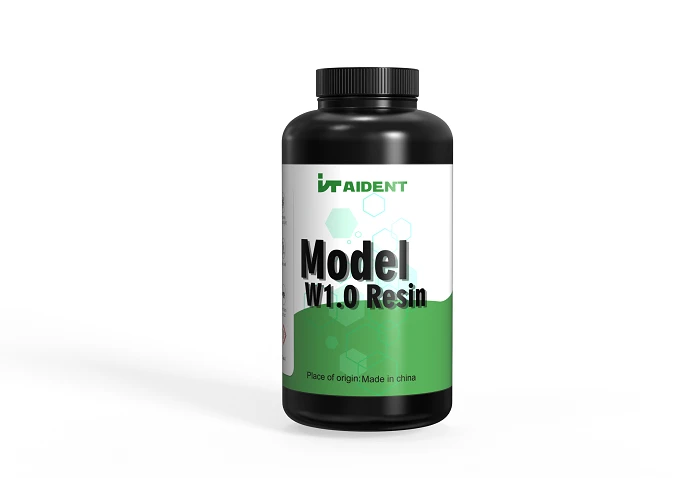
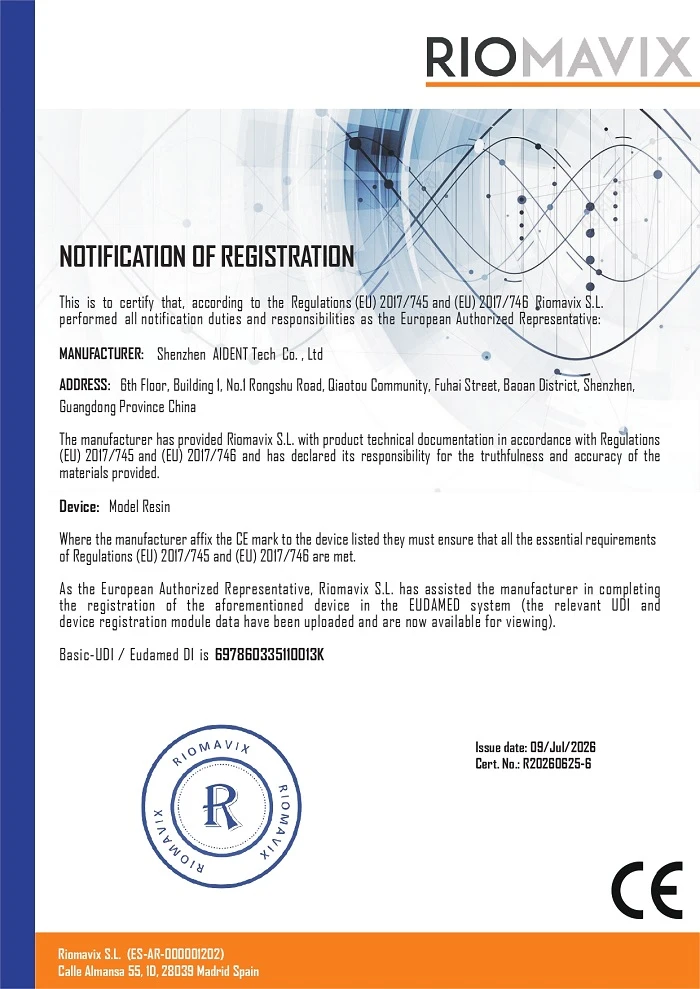
A manufacturer that understands dental laboratory realities - rather than treating resin as a generic photopolymer - tends to produce more usable material and better long-term support. For example, precision-formulated resins such as Aident's model series are designed to keep warpage under 0.4 % after post-curing while maintaining Shore D hardness in the 85–88 range and compatibility with standard 385–405 nm printers. That combination of measurable performance and process practicality is what laboratories actually need.
FAQ
Q: What is dental model resin used for?
A: It produces physical models from digital scans for diagnosis, restorative work, implant planning, orthodontics, and communication with clinicians.
Q: Which printers can use it?
A: Most open-system LCD and DLP dental printers operating at 385–405 nm. Always check the supplier's recommended parameter sets.
Q: Is recalibration required when switching resin brands?
A: Often yes, at least for exposure time and support settings. A good supplier provides starting parameters and guidance for fine-tuning.
Q: How long can liquid resin sit in the vat?
A: This varies by formulation. Many professional resins remain usable for several days to a couple of weeks if protected from light and kept within recommended temperature ranges. Always follow the manufacturer's guidance and filter the resin before reuse.
Q: Is wholesale and private-label supply available?
A: Yes. Established manufacturers commonly offer bulk packaging and OEM services for laboratories, distributors, and private-label partners.

Upgrading Your Lab's Digital Workflow
The shift from gypsum to printed models is no longer experimental. Laboratories that treat model resin as a critical process material - rather than a commodity - gain measurable improvements in speed, consistency, and remake rates. The difference between an average resin and a well-formulated one shows up in daily work: models that still fit after sitting overnight, fewer chips during try-in, and less time spent on finishing.
If you are evaluating materials for your laboratory or distribution network, look for documented dimensional performance, practical process support, and a supplier that understands dental workflows.
Aident Technology develops dental model resins focused on the performance characteristics laboratories actually measure - controlled warpage, reliable hardness, and compatibility with common dental printers. OEM and wholesale options are available.


