


Introduction: Why Try-in Resin Matters in Modern Digital Dentistry
Digital dentistry has changed how laboratories and clinics design and deliver restorations. Many labs that once depended on traditional wax try-ins now run fully digital workflows. Conventional wax try-ins often demand long fabrication times, repeated manual adjustments, and results that vary with technician experience. These constraints make it harder to meet today's expectations for speed and consistency.
Try-in Resin solves many of these problems. It is formulated for the verification stage of digital prosthetics, letting teams produce temporary try-in models quickly, check occlusion early, evaluate esthetics, and discuss treatment plans more clearly with patients. Materials engineered for real laboratory conditions deliver the accuracy and reliability that modern CAD/CAM workflows require.
What Is Try-in Resin?
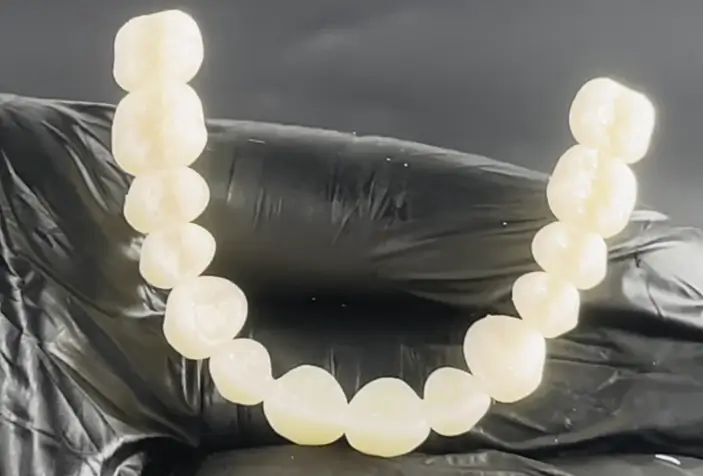
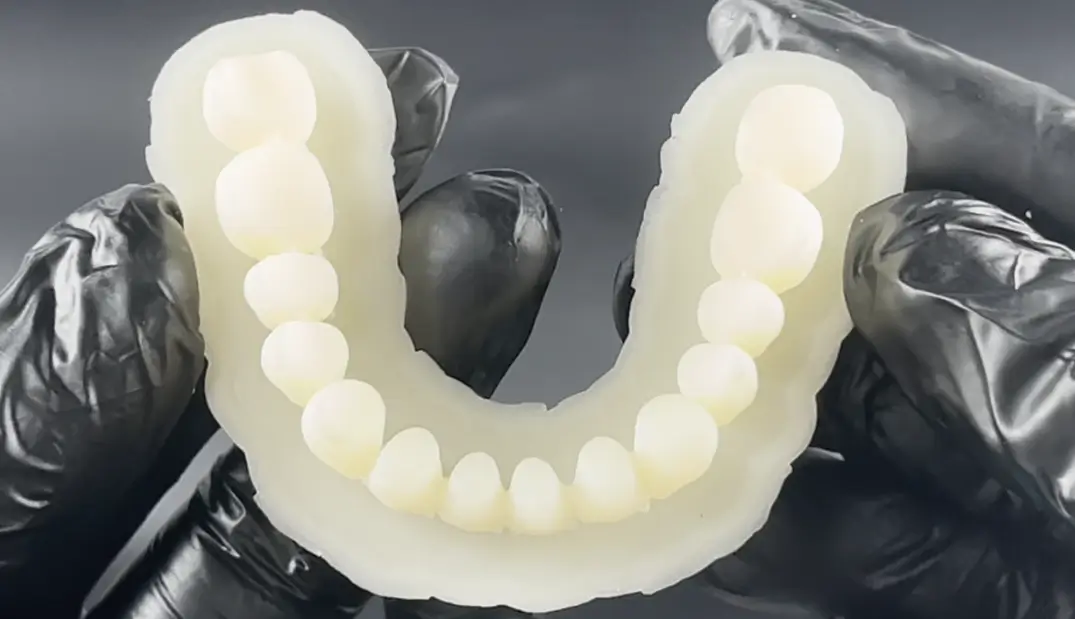
Try-in Resin is a 3D-printable material designed specifically for the verification stage of digital prosthetics. It creates temporary models so clinicians and technicians can assess fit, occlusion, tooth position, and appearance before the final restoration is made.
Common uses include:
- Denture try-in
- Full denture prototypes
- Implant denture verification
- Temporary restorations
A typical digital sequence runs: digital scan → CAD design → 3D printing → clinical try-in verification → final restoration. These materials let labs replace labor-intensive wax try-ins with precise, repeatable printed models that fit cleanly into existing CAD/CAM processes. Explore our range of 3D printing dental resins for formulations matched to widely used printer systems.
Why Dental Labs Need Try-in Resin
1 Improve Denture Fitting Accuracy
Traditional wax try-ins are vulnerable to deformation, dimensional drift, and inconsistencies from manual handling. Quality digital denture materials offer low shrinkage and stable dimensions across multiple prints. The result is fewer chairside adjustments and more predictable final prostheses.
2 Reduce Production Time and Labor Cost
Laboratories constantly balance throughput, labor cost, and delivery speed. Printing try-in models removes most manual waxing steps. Unlike traditional wax that can warp on a warm day or shift in transit, printed models hold their dimensions reliably from the print bed to the chairside evaluation. Skilled technicians can focus on higher-value work while overall turnaround shortens.
3 Improve Patient Communication Experience
A physical try-in model lets patients see and feel the proposed restoration before the definitive version is fabricated. Dentists can refine tooth shape, discuss shade preferences, and confirm esthetic goals in real time. Higher acceptance rates and fewer remakes follow naturally. These materials support a smoother digital denture workflow that benefits both the practice and the patient.
How Does Try-in Resin Work in Digital Dentistry?
The process is straightforward and data-driven:
Digital impression scanning captures soft-tissue and residual-ridge data with intraoral or dedicated denture scanners.
CAD design defines tooth arrangement, occlusion, and base contours in software built for digital dentures.
3D printing produces the model on LCD, DLP, or SLA systems compatible with the chosen resin.
Try-in evaluation checks occlusion, esthetics, comfort, and tooth position. Any changes are recorded digitally and carried into the final design.
This approach replaces several traditional appointments with a more efficient sequence focused on clinical outcomes.
Key Features of High-Quality Dental Try-in Resin
1 High Printing Accuracy
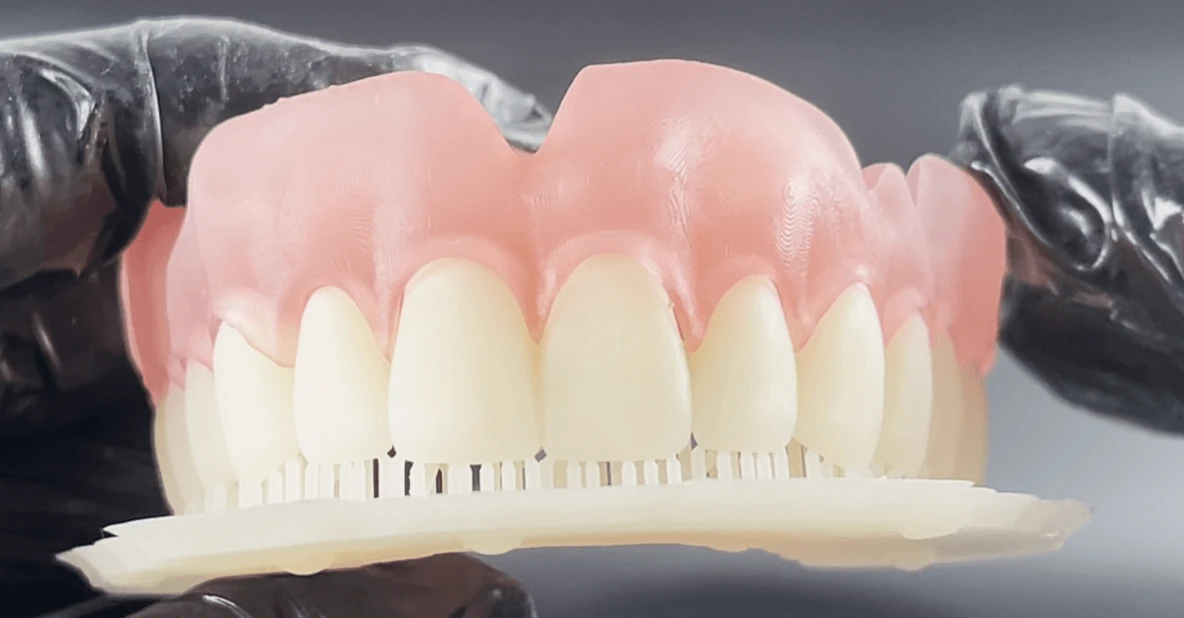
Premium formulations show low shrinkage and strong dimensional stability, delivering fine surface detail and reliable fit. Typical performance targets include flexural strength above 80 MPa and controlled viscosity that supports consistent layer curing. These characteristics reduce the need for post-print corrections.
2 Natural Tooth-Like Appearance
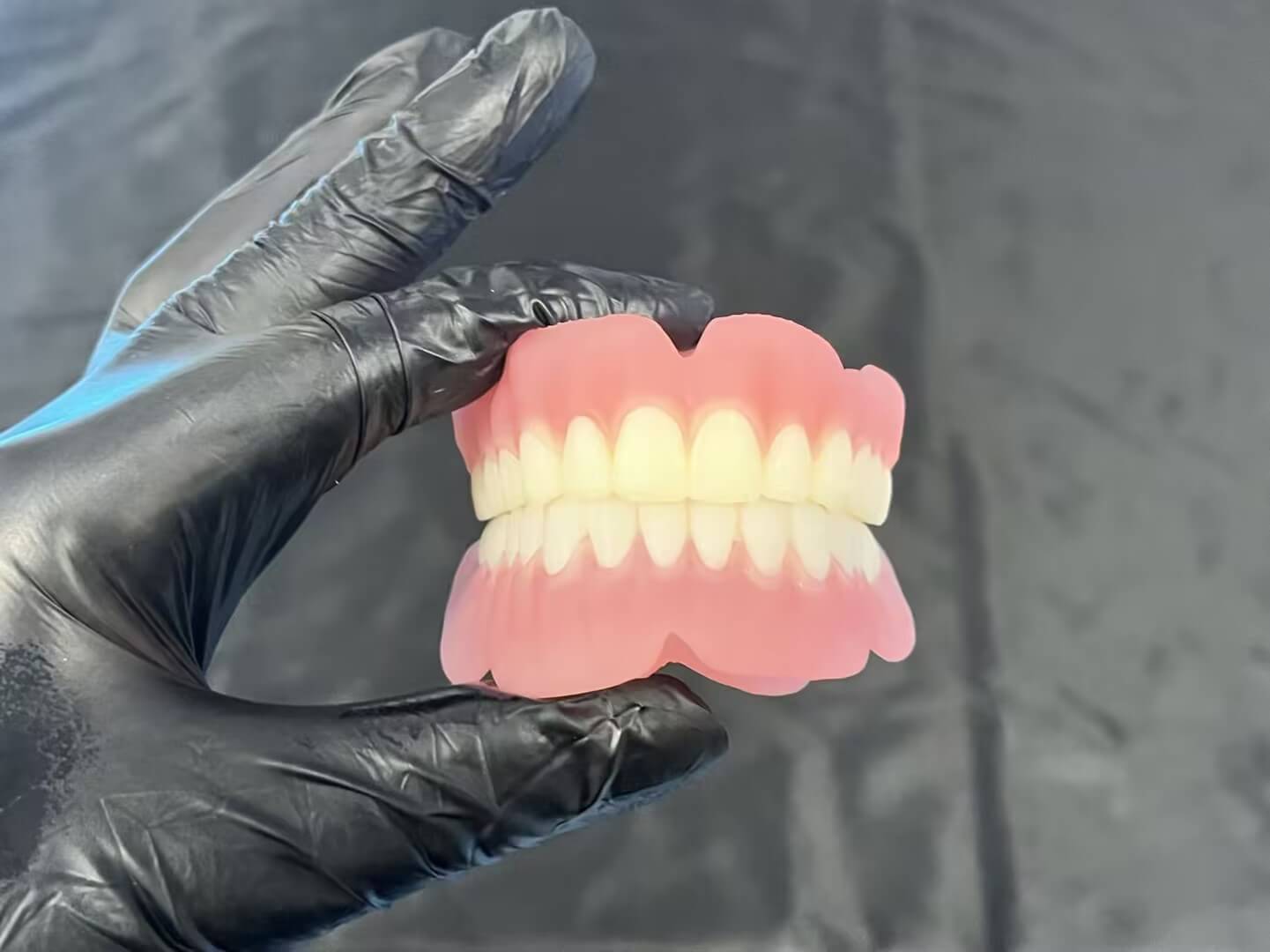
Effective materials provide realistic color and translucency that aid shade matching and improve patient acceptance during the try-in appointment.
3 Easy Post-Processing and Intraoral Safety
Quality resins clean easily, follow straightforward curing protocols, and retain stable mechanical properties afterward. Because try-in models are placed directly in the mouth, Class-certified biocompatibility (ISO 10993 and relevant Class I / Class IIa documentation), along with CE and applicable FDA clearances, is essential for safe intraoral testing.
4 Compatible With Multiple 3D Printers
Broad printer compatibility gives laboratories flexibility. Technicians simply confirm that the resin performs consistently on the equipment already in use.
Applications of Try-in Resin in Dental Labs
1 Denture Try-in Models
Used for complete and partial dentures to verify fit, retention, and esthetics before final processing.
2 Implant Denture Verification
Printed try-ins confirm implant-supported designs and help evaluate prosthetic space and occlusion during planning.
3 Prosthetic Design Verification
Teams use the models to assess overall esthetics and occlusal relationships. Printed try-ins make these checks faster and more repeatable than traditional methods.

Try-in Resin vs Traditional Wax Try-in: What Is the Difference?
| Comparison | Try-in Resin | Traditional Wax |
|---|---|---|
| Production Method | 3D Printing | Manual Waxing |
| Accuracy | High | Depends on technician |
| Workflow | Digital | Traditional |
| Repeatability | Excellent | Limited |
| Production Speed | Faster | Slower |
Digital workflows continue to make printed try-in materials a practical core component for modern laboratories seeking both speed and clinical precision.

How to Choose a Reliable Try-in Resin Partner
1 Material Quality
Review formulation stability, batch consistency, and technical data. Request sheets that list viscosity, flexural strength, and sample prints when possible.
2 Manufacturing Capability
Look at production capacity, quality-control systems, and technical support. Experienced manufacturers understand laboratory schedules and can advise on printer settings and post-processing.
3 Certification and Compliance
Confirm ISO 13485 and ISO 10993 standards, CE Class I/IIa certification where applicable, and complete material safety documentation. For intraoral use, documented biocompatibility is non-negotiable.
4 OEM & Wholesale Support
Larger labs and distributors often need custom packaging, private-label options, and flexible bulk terms. Partners who offer these services make scaling simpler. Explore our Digital Denture Workflow resources for additional technical guidance.
Why Leading Dental Labs Partner With Us
More than a decade of ISO 13485-certified manufacturing has shaped resins specifically for dental laboratory conditions. Over 100 validated parameter sets are pre-configured for common Formlabs, Ackuretta, and open-source LCD/DLP systems, reducing trial-and-error on the shop floor.
Batch-to-batch consistency is maintained through in-house quality controls that track viscosity, mechanical strength, and color stability. Technical support teams with practical lab experience help customers optimize print settings and post-processing rather than simply shipping material.
OEM and private-label programs include custom packaging, branding, and volume pricing structured for distributors and high-volume laboratories. These practical capabilities-not marketing claims-explain why many labs treat the materials as a reliable part of their daily digital workflow.
FAQ
Q1: What is Try-in Resin used for?
It is used for digital denture try-in and restoration verification so clinicians can evaluate fit, occlusion, and esthetics before final fabrication.
Q2: Is Try-in Resin suitable for denture applications?
Yes. It is designed for temporary try-in procedures in complete and partial denture workflows.
Q3: What printers are compatible with Dental Try-in Resin?
Most formulations work with common LCD, DLP, and SLA dental printers. Always verify compatibility for the specific resin and machine combination.
Q4: Can I buy Try-in Resin wholesale?
Yes. Bulk orders, distributor partnerships, and OEM services are routinely available for laboratories and resellers.
Q5: What should I look for in a Try-in Resin manufacturer?
Prioritize documented production experience under ISO 13485, robust quality systems, proven biocompatibility for intraoral use, and responsive technical support.

Conclusion: Upgrade Your Digital Dental Workflow With Premium Try-in Resin
Digital dentistry rewards speed and accuracy. Try-in Resin helps laboratories raise production efficiency, lower remake rates, and improve patient communication through clearer verification. Choosing materials that meet laboratory realities and regulatory expectations is a crucial step toward scaling your lab's digital capabilities.
Request a free sample kit or download our Technical Data Sheet (TDS) to evaluate performance on your printers. Contact us today for specifications, samples, and wholesale options tailored to laboratory needs.


