Dentist-grade yellow resin primarily refers to light-cured composite resin formulated for dental restorations. These materials are carefully shaded to match the natural yellowish tones of human dentin or posterior teeth. In some cases, modified glass ionomer cements with yellow tinting are also used, especially for pediatric or base applications.
Core Composition of Light-Cured Composite Resin
1. Resin Matrix (Organic Phase)
Typically accounts for 20–40% by weight.
Common monomers include:
Bis-GMA (bisphenol A diglycidyl methacrylate)
UDMA (urethane dimethacrylate)
Often blended for optimal viscosity, strength, and flexibility
This polymer network provides the structural backbone after curing and contributes to adhesion and toughness.
2. Inorganic Fillers
Usually 60–80% by weight.
Main components:
High-purity spherical silica (silicon dioxide)
Radiopaque barium or strontium glass particles
Particle sizes are controlled (commonly 0.01–10 μm, including nano and micro sizes) to balance mechanical strength, polishability, wear resistance, and X-ray visibility.
3. Functional Additives
Photoinitiators (most commonly camphorquinone) activated by dental curing lights in the 400–500 nm blue-light range
Co-initiators / accelerators (amines)
Inhibitors to ensure adequate working time and prevent premature polymerization during storage
Curing typically occurs in 10–60 seconds depending on layer thickness and light intensity.
4. Medical-Grade Colorants
Yellow shades are achieved with biocompatible, medical-grade pigments such as iron oxide yellow or other approved inorganic/organic colorants. These must meet strict oral biocompatibility and safety standards. Industrial-grade dyes are never used.
Modified Glass Ionomer Cement (Alternative Yellow Option)
Some yellow restorative materials are based on modified glass ionomer technology:
Polyacrylic acid matrix + fluoro-aluminosilicate glass powder
Zinc polycarboxylate components in certain formulations
Added medical-grade yellow colorants
These materials release fluoride and are often preferred for primary teeth restorations or as base/liner materials. Their mechanical strength is generally lower than that of hybrid or nanofilled composite resins.
Typical Clinical Applications of Yellow-Shade Resins
Posterior restorations: Yellow tones better match the natural color of molars and premolars under occlusal load. High-filler composites provide the necessary compressive strength and wear resistance.
Layered anterior restorations: Dentin or body shades in yellow/yellow-brown are placed as the underlying layer to block dark backgrounds and create natural depth before enamel-shade layers are added.
Pediatric dentistry: Fluoride-releasing yellow glass ionomers or composites are frequently chosen for primary teeth due to their caries-preventive benefit and ease of use.
Key Points for Clinicians and Patients
Success depends on proper isolation, adhesive protocol, incremental placement, adequate light curing, and finishing. Shade selection should consider the patient's age, tooth location, and surrounding dentition. Always verify that the material carries appropriate medical-device certifications for intraoral use.
While direct composite resins (including carefully matched yellow shades) remain a cornerstone of conservative dentistry, digital workflows are increasingly integrated into restorative practice. Accurate intraoral scanning, CAD design, and 3D printing of provisional restorations, models, and guides improve precision and efficiency alongside traditional materials.
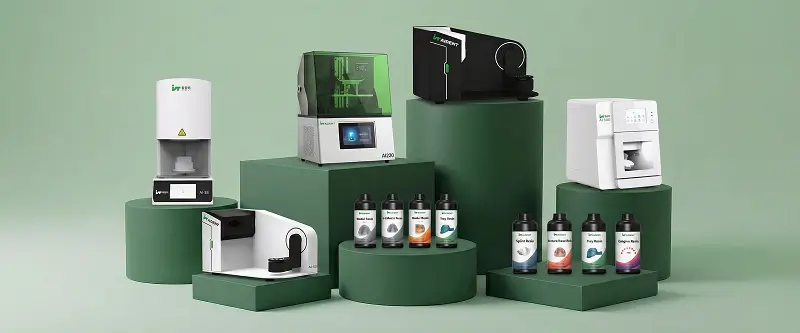
Aident3D specializes in complete digital dentistry solutions - powder-free intraoral scanners, lab scanners, open-system 3D printers, and high-performance dental resins - designed to support modern clinics and laboratories.
Explore how digital tools can enhance your restorative outcomes
Visit https://www.aident3d.com/ or contact us:
WhatsApp +86 19311417410 | Email dongjiahao@aident.cc